Instructions
Part 1: Making the Soft Buttery Cake Layers
- Preheat your oven to 350°F (175°C). Grease and flour three 8-inch round cake pans, tapping out any excess flour. Line the bottoms with parchment paper if desired for easy release.
- In a medium bowl, whisk together the flour, baking powder, baking soda, and salt. Set aside.
- In a large bowl, using an electric mixer (stand mixer with paddle attachment or hand-held mixer), cream together the softened butter and granulated sugar on medium-high speed until light and fluffy, about 3-5 minutes. Scrape down the sides of the bowl as needed.
- Add the eggs one at a time, beating well after each addition until fully incorporated. Stir in the vanilla extract.
- With the mixer on low speed, gradually add about one-third of the dry ingredients to the wet ingredients, mixing until just combined.
- Pour in half of the buttermilk, mixing until just combined.
- Repeat with another third of the dry ingredients, then the remaining buttermilk, and finally the last third of the dry ingredients. Mix until just combined and no streaks of flour remain. Be careful not to overmix, as this can lead to a dry cake.
- Divide the batter evenly among the three prepared cake pans.
- Bake for 25-30 minutes, or until a wooden skewer inserted into the center of a cake comes out clean.
- Remove cakes from the oven and let them cool in their pans on a wire rack for 10-15 minutes.
- Invert the cakes onto the wire rack, remove the pans, and carefully peel off any parchment paper. Let the cake layers cool completely before frosting, at least 1-2 hours.
Part 2: Crafting the Perfect Caramel Frosting
- In a large, heavy-bottomed saucepan, combine the granulated sugar and water. Stir gently to moisten all the sugar.
- Place the saucepan over medium heat. Cook without stirring until the sugar dissolves and the mixture comes to a boil. Once boiling, stop stirring.
- Continue to cook, swirling the pan occasionally, until the sugar syrup turns a rich amber caramel color. This can take 8-12 minutes. Watch it closely, as it can go from perfect to burnt very quickly. If you have a candy thermometer, cook until it reaches 320°F (160°C).
- Immediately and very carefully, remove the pan from the heat. Slowly pour in the heavy cream while continuously whisking. Be extremely cautious as the mixture will bubble up vigorously.
- Add the cubed butter and salt to the caramel mixture. Whisk until the butter is completely melted and incorporated.
- Stir in the vanilla extract.
- Allow the caramel mixture to cool down for about 20-30 minutes, or until it’s warm but not hot to the touch (around 100-110°F / 38-43°C). This is crucial for the frosting consistency.
- Pour the slightly cooled caramel into a large mixing bowl. Add the sifted powdered sugar.
- Using an electric mixer, beat on medium speed until the frosting is smooth, creamy, and spreadable. This may take 3-5 minutes. If the frosting seems too thick, add a tablespoon of milk or cream at a time until desired consistency is reached. If it’s too thin, add a little more sifted powdered sugar.
Part 3: Assembling the Cake
- Once the cake layers are completely cool and the frosting is ready, place one cake layer on your serving plate or cake stand.
- Spread about 1/2 to 3/4 cup of caramel frosting evenly over the top of the first layer.
- Carefully place the second cake layer on top and repeat with another layer of frosting.
- Add the third cake layer.
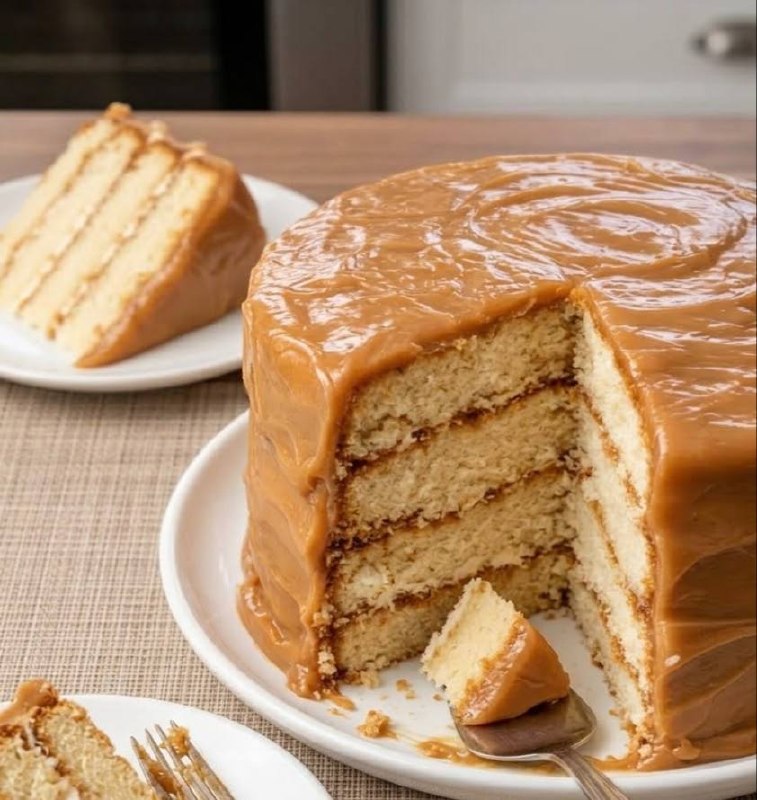
- Spread the remaining caramel frosting over the top and down the sides of the cake, using an offset spatula to create an even, smooth finish. Allow some of the frosting to drip artfully down the sides for that classic Southern look.
- Chill the cake in the refrigerator for at least 30 minutes to allow the frosting to set slightly before slicing and serving.
Cooking Tips and Variations
Pro Tips for Success:
- Room Temperature Ingredients are Key: Ensure your butter, eggs, and buttermilk are all at room temperature. This allows them to emulsify properly, creating a smooth batter and a tender crumb.
- Don’t Overmix the Batter: Once you add the dry ingredients, mix only until just combined. Overmixing develops gluten, which can lead to a tough, dry cake.
- Patience with Caramel: Making caramel takes practice and patience. Watch it constantly, especially after it starts to change color. A candy thermometer is highly recommended for precision, aiming for 320°F (160°C). If you don’t have one, look for a rich, amber color and a nutty aroma.
- Cooling the Caramel: Allowing the caramel to cool slightly before adding powdered sugar is essential. If it’s too hot, the powdered sugar will melt and make the frosting too thin. If it’s too cool, it will be difficult to mix.
- Cool Cake Layers Completely: Never frost warm cake layers. The frosting will melt and slide off, creating a mess.
- Leveling Cake Layers: For a professional look, use a serrated knife to level the tops of your cake layers if they have domed during baking.
- Crumb Coat: For a super smooth finish, apply a thin layer of frosting all over the cake, chilling it for 15-20 minutes to set, then apply the final, thicker layer of frosting.
Troubleshooting Common Issues:
- Cake Too Dry/Dense: Likely due to overmixing the batter or overbaking. Ensure you measure flour correctly (spooned and leveled) and don’t mix beyond just combined.
- Frosting Too Thin/Thick/Grainy:
- Too Thin: Add more sifted powdered sugar, a tablespoon at a time, until desired consistency.
- Too Thick: Add a teaspoon of warm milk or cream, one at a time, until desired consistency.
- Grainy: This can happen if the sugar didn’t fully dissolve in the initial caramel-making stage or if the caramel crystallized. Ensure you don’t stir once boiling and cook until a true amber color.
- Caramel Scorching: Use a heavy-bottomed saucepan to distribute heat evenly. Keep the heat at medium, and don’t walk away. If you see dark spots or smell burning, discard and start over.
Delicious Variations:
- Pecan Perfection: Fold 1 cup of finely chopped toasted pecans into the cake batter, or sprinkle them between the layers and on top of the frosted cake for a delightful crunch.
- Salted Caramel Twist: Increase the salt in the frosting to 3/4 teaspoon, or sprinkle a pinch of flaky sea salt over the top of the finished cake for a sophisticated contrast.
- Spiced Caramel Cake: Add 1/2 teaspoon of ground cinnamon and 1/4 teaspoon of ground nutmeg to the dry ingredients for the cake layers for a warm, autumnal flavor.
- Brown Sugar Caramel: For an even deeper, richer caramel flavor, you can substitute half of the granulated sugar in the frosting with light brown sugar.
Storage and Reheating
Storage: This Southern Caramel Cake can be stored at room temperature, covered loosely with plastic wrap or a cake dome, for up to 2 days. For longer storage, refrigerate the cake, covered, for up to 5 days. Be aware that refrigeration can sometimes slightly alter the texture of the cake layers, making them a little firmer, but the flavor remains excellent. For best results, allow refrigerated cake to come to room temperature for at least 30 minutes before serving.
Freezing: You can freeze individual slices or the entire cake (unfrosted layers or frosted cake). To freeze frosted cake, place it in the freezer uncovered until the frosting is firm (about 1-2 hours), then wrap it tightly in plastic wrap and then in aluminum foil. It can be stored in the freezer for up to 2-3 months. Thaw overnight in the refrigerator, then bring to room temperature before serving. Unfrosted cake layers can be wrapped tightly in plastic wrap and then foil and frozen for up to 3 months. Thaw at room temperature before frosting.
Reheating: Caramel cake is best enjoyed at room temperature. If it has been refrigerated, simply let it sit on the counter for 30-60 minutes before serving to allow the cake and frosting to soften and flavors to fully develop.
Frequently Asked Questions
Why did my caramel frosting turn out grainy?
Grainy caramel frosting is usually caused by sugar crystals that didn’t fully dissolve during the initial cooking phase. To prevent this, ensure all the sugar is moistened by water before heating, avoid stirring the sugar syrup once it boils, and use a clean brush dipped in water to wipe down the sides of the pan if any sugar crystals appear during cooking. Cooking to the correct temperature (320°F or 160°C) is also crucial for smooth caramel.
Can I make this cake ahead of time?
Absolutely! The cake layers can be baked a day or two in advance, wrapped tightly in plastic wrap once completely cooled, and stored at room temperature or refrigerated. The caramel frosting can also be made a day ahead, stored in an airtight container in the refrigerator. Before frosting, gently warm the refrigerated frosting over very low heat or in a microwave in short bursts, stirring frequently, until it’s a spreadable consistency again. You may need to beat it briefly with an electric mixer to restore its creaminess.
What if I don’t have buttermilk?
If you don’t have buttermilk on hand, you can easily make a substitute. For 1 1/4 cups of buttermilk, measure 1 1/4 cups of regular milk (dairy or non-dairy) and stir in 1 1/4 tablespoons of white vinegar or lemon juice. Let it sit for 5-10 minutes until it slightly curdles. This acidified milk works as a good substitute for buttermilk in baking.
My caramel seized when I added the cream. What happened?
Caramel seizing (hardening into a solid mass) when liquid is added is a common issue. It usually happens if the cream (or other liquid) is too cold. The sudden temperature shock causes the sugar to crystallize. To prevent this, ensure your heavy cream is at room temperature or even slightly warmed before slowly pouring it into the hot caramel while continuously whisking. This helps to temper the caramel and prevent it from seizing.