Introduction
There are some dishes that instantly transport you to a cozy Italian trattoria, even when you’re dining in your own kitchen. Chicken Piccata is undeniably one of them. This classic Italian-American recipe is celebrated for its bright, zesty lemon-caper sauce, tender chicken, and elegant simplicity. Traditionally, it involves pan-frying thin chicken cutlets, a method that delivers delicious results but can sometimes feel a bit hands-on for a busy weeknight. That’s where the magic of the slow cooker comes in. Imagine taking all those vibrant flavors and letting them meld and deepen over hours, with minimal effort from you. This Slow Cooker Chicken Piccata recipe transforms a beloved classic into an incredibly convenient, set-it-and-forget-it meal that’s perfect for any day of the week.
Our slow cooker version doesn’t compromise on flavor or texture. The chicken breasts emerge incredibly tender and infused with the rich, tangy sauce, which is studded with briny capers and brightened by fresh lemon. We even incorporate a quick browning step for the chicken at the beginning, a secret weapon that adds a crucial layer of flavor and a beautiful golden hue, ensuring that even in the slow cooker, your piccata looks and tastes like a restaurant-quality dish. Served over a bed of al dente spaghetti, this meal is pure comfort food, satisfying and utterly delicious. It’s the kind of dish that makes you feel like a gourmet chef without all the fuss.
Whether you’re new to slow cooking or a seasoned pro, this Slow Cooker Chicken Piccata is a recipe you’ll want to add to your regular rotation. It’s perfect for meal prepping, entertaining, or simply enjoying a fantastic home-cooked meal with your family. The aroma alone will have everyone eagerly awaiting dinner, and the taste will confirm that some classics are just meant to be made easier without losing an ounce of their charm. Get ready to experience the beloved flavors of Chicken Piccata, simplified for your busy life.
Nutritional Information
Per serving (approximate values):
- Calories: 580
- Protein: 55g
- Carbohydrates: 45g
- Fat: 20g
- Fiber: 3g
- Sodium: 950mg
Ingredients
- 4 boneless, skinless chicken breasts (about 1.5-2 lbs total)
- 1/2 cup all-purpose flour
- 1 teaspoon salt
- 1/2 teaspoon black pepper
- 2 tablespoons olive oil, divided
- 1/2 cup chicken broth
- 1/2 cup dry white wine (such as Pinot Grigio or Sauvignon Blanc), or additional chicken broth
- 1/4 cup fresh lemon juice (from 2-3 lemons)
- 2 tablespoons capers, drained
- 1/4 cup unsalted butter, cut into 4 pieces
- 2 cloves garlic, minced
- 1 teaspoon dried oregano
- 1/2 teaspoon garlic powder
- 1/4 cup fresh parsley, chopped, plus more for garnish
- 12 ounces spaghetti or linguine
- Lemon slices, for garnish
Instructions
- Pat chicken breasts completely dry with paper towels. In a shallow dish, combine the flour, 1/2 teaspoon salt, and 1/4 teaspoon black pepper. Dredge each chicken breast in the flour mixture, shaking off any excess.
- Heat 1 tablespoon olive oil in a large skillet over medium-high heat. Sear the floured chicken breasts for 2-3 minutes per side, until golden brown. The chicken does not need to be cooked through at this stage. Transfer the seared chicken to the slow cooker insert.
- In the same skillet (no need to clean it), add the remaining 1 tablespoon olive oil, minced garlic, dried oregano, and garlic powder. Sauté for 1 minute until fragrant.
- Pour in the chicken broth, white wine (or additional broth), and fresh lemon juice. Bring the mixture to a simmer, scraping up any browned bits from the bottom of the pan with a wooden spoon. Stir in the drained capers.
- Carefully pour the sauce mixture over the chicken breasts in the slow cooker. Distribute the pieces of unsalted butter evenly over the chicken.
- Cover the slow cooker and cook on LOW for 3-4 hours, or on HIGH for 2-3 hours, until the chicken is tender and cooked through. The exact cooking time will depend on your slow cooker and the thickness of your chicken breasts. Chicken is done when it reaches an internal temperature of 165°F (74°C).
- About 30 minutes before serving, cook the spaghetti according to package directions until al dente. Drain well.
- Once the chicken is cooked, carefully remove the chicken breasts from the slow cooker and set aside on a cutting board. You can shred the chicken, slice it, or leave it whole, depending on your preference.
- To thicken the sauce: If desired, you can make a cornstarch slurry by whisking 1 tablespoon of cornstarch with 2 tablespoons of cold water. Stir this mixture into the hot sauce in the slow cooker and cook on HIGH for another 15-20 minutes, or until the sauce has thickened to your liking. Alternatively, you can transfer the sauce to a saucepan and simmer on the stovetop until reduced and thickened.
- Stir the fresh chopped parsley into the sauce in the slow cooker.
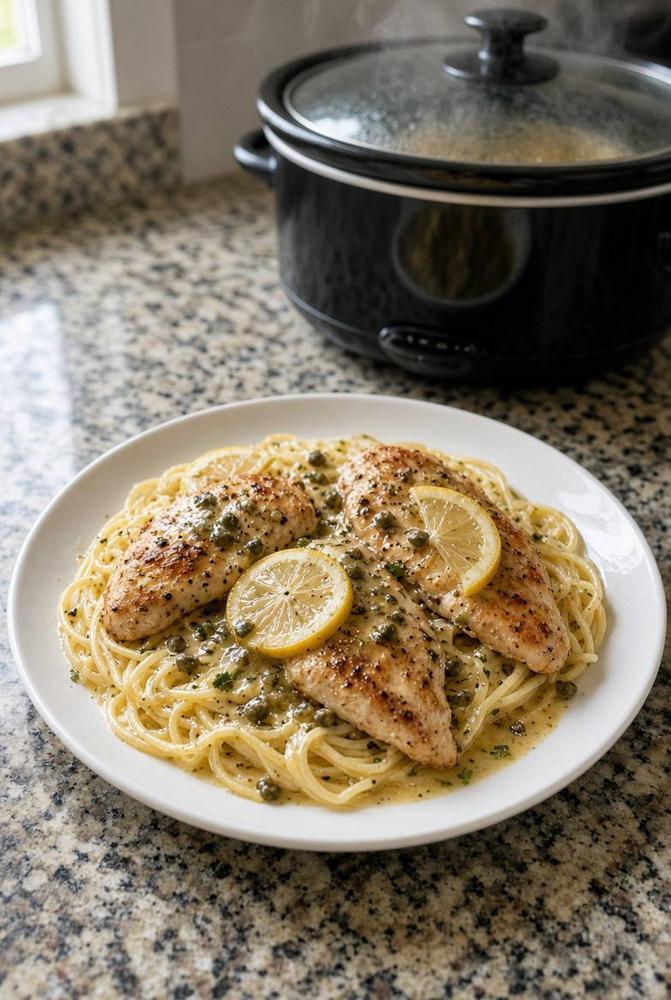
- Serve the slow cooker chicken piccata over the cooked spaghetti, generously spooning the lemon-caper sauce over the chicken and pasta. Garnish with fresh lemon slices and additional chopped parsley. Enjoy!
Cooking Tips and Variations
Achieving the perfect Slow Cooker Chicken Piccata is all about understanding a few key techniques and knowing how to adapt the recipe to your taste. Here are some tips to ensure your dish is consistently delicious, along with ideas for variations.
Don’t Skip the Sear: While it might seem like an extra step, browning the chicken breasts in a skillet before adding them to the slow cooker is crucial for developing deep, rich flavor and a beautiful golden color. This caramelization process, known as the Maillard reaction, adds a layer of complexity that you simply can’t achieve with raw chicken alone in the slow cooker. It seals in juices and creates a more appealing texture. If you’re truly pressed for time, you can skip it, but for the best results, take those extra few minutes.
Pound Your Chicken: For even cooking and maximum tenderness, consider pounding your chicken breasts to an even 1/2-inch thickness. This ensures that all parts of the chicken cook at the same rate, preventing some areas from drying out while others are still cooking. Use a meat mallet or a heavy rolling pin between two pieces of plastic wrap for easy cleanup.
Sauce Consistency is Key: The sauce from the slow cooker will be flavorful but might be thinner than a traditional piccata sauce. If you prefer a thicker sauce, there are a few ways to achieve it. The simplest is to create a cornstarch slurry (1 tablespoon cornstarch mixed with 2 tablespoons cold water) and stir it into the hot sauce in the slow cooker during the last 15-20 minutes of cooking on HIGH. Alternatively, you can transfer the sauce to a saucepan on the stovetop after removing the chicken and simmer it over medium-high heat until it reduces and thickens to your desired consistency. Taste and adjust seasonings after thickening.
Adjusting Tanginess: Lemon is the star of piccata, but everyone’s preference for tanginess varies. Start with the recommended amount of lemon juice, then taste the sauce at the end. If you desire more zing, add another squeeze of fresh lemon juice just before serving. A little lemon zest grated over the top can also amplify the citrus notes without adding more liquid.
Quality Ingredients Matter: Since this dish has relatively few ingredients, the quality of each really shines through. Use fresh lemons, good quality capers (non-pareil capers are often preferred for their small size and delicate texture), and a decent dry white wine that you would enjoy drinking. If omitting wine, use a good quality chicken broth.
Pasta Pairing: While spaghetti is a classic choice and works beautifully, feel free to experiment with other pasta shapes. Linguine, fettuccine, or even a shorter pasta like penne or rigatoni can work well. The key is to cook the pasta separately and mix it with the sauce and chicken just before serving to prevent it from becoming mushy. You can also serve the chicken and sauce over mashed potatoes, rice, or polenta for a gluten-free option.
Add-ins for Extra Flavor:
- Vegetables: Boost the nutritional content and flavor by adding some vegetables. Sautéed mushrooms can be added to the slow cooker along with the chicken. Stir in fresh spinach or blanched asparagus during the last 30 minutes of cooking for a vibrant touch. Artichoke hearts (canned, drained, and quartered) are also a fantastic addition to the sauce.
- Herbs: While parsley is traditional, a touch of fresh thyme or rosemary can add another layer of aromatic complexity. Add fresh herbs towards the end of cooking to preserve their flavor.
- Spiciness: For a subtle kick, add a pinch of red pepper flakes to the sauce when you’re simmering it in the skillet.
- Creaminess: For an even richer, creamier sauce, stir in a splash of heavy cream or a tablespoon of cream cheese during the last 30 minutes of cooking, after the chicken is removed.
By keeping these tips in mind, you can customize this Slow Cooker Chicken Piccata to perfectly suit your palate and create a meal that will impress every time.
Storage and Reheating
Proper storage and reheating are essential for enjoying your Slow Cooker Chicken Piccata beyond the initial meal. With a few simple steps, you can ensure your leftovers taste just as delicious as the first serving.
Storage:
- Cool Completely: Before storing, allow the chicken and sauce to cool down to room temperature. This is crucial to prevent bacterial growth and to ensure the quality of your leftovers. Do not leave food out for more than two hours.
- Separate Components: For best results, it’s often a good idea to store the chicken and sauce separately from any leftover pasta. Pasta tends to absorb more sauce and can become mushy if stored together for too long. If you mixed the pasta and chicken/sauce together for serving, you can still store them together, but be aware the pasta texture might change slightly.
- Airtight Containers: Transfer the cooled chicken and sauce into separate airtight containers. This prevents air exposure, which can lead to drying out and flavor degradation.
- Refrigeration: Store the containers in the refrigerator for up to 3-4 days.
- Freezing (Sauce Only): While you can technically freeze the chicken and sauce together, the texture of the chicken (especially if it was already very tender from slow cooking) can become a bit stringy upon thawing. The sauce, however, freezes beautifully. If you want to freeze, separate the sauce into freezer-safe containers or bags. It can be stored for up to 3 months. Thaw overnight in the refrigerator before reheating.
Reheating:
- Chicken and Sauce (Stovetop Method – Recommended): This is the best method for preserving the quality of the chicken and sauce.
- Transfer the desired amount of chicken and sauce to a saucepan or skillet over medium-low heat.
- Add a splash of chicken broth or water if the sauce seems too thick or dry.
- Heat gently, stirring occasionally, until the chicken is heated through and the sauce is simmering. Avoid high heat, which can toughen the chicken.
- Chicken and Sauce (Microwave Method): This is the quickest option, but can sometimes lead to uneven heating or a slightly less desirable texture.
- Place the chicken and sauce in a microwave-safe dish.
- Cover loosely with a lid or microwave-safe plastic wrap, leaving a small vent.
- Heat on medium power in 1-minute intervals, stirring in between, until heated through.
- Reheating Pasta:
- If stored separately, you can reheat leftover pasta by briefly plunging it into boiling water for 30-60 seconds, or by tossing it in a skillet with a little olive oil or butter until warm.
- If the pasta was stored with the sauce, reheat it together using the stovetop or microwave method, adding a splash of liquid if needed.
- Combine and Serve: Once the chicken, sauce, and pasta are reheated, combine them and serve immediately. You can refresh the dish with a squeeze of fresh lemon juice and a sprinkle of fresh parsley for a burst of flavor.
By following these guidelines, you can enjoy the delicious flavors of your Slow Cooker Chicken Piccata for days to come, making it an excellent candidate for meal prep.
Frequently Asked Questions
What kind of chicken is best for slow cooker piccata?
Boneless, skinless chicken breasts are ideal for this recipe. They cook up tender and absorb the flavors of the sauce beautifully. You can also use boneless, skinless chicken thighs for an even richer flavor and juicier texture, though cooking times might need slight adjustment. If using thighs, consider trimming excess fat before searing.
Can I make this recipe without white wine?
Absolutely! If you prefer not to use alcohol, you can simply substitute the dry white wine with an equal amount of chicken broth. The dish will still be incredibly flavorful due to the lemon, capers, butter, and herbs. For a touch more acidity, you could add an extra splash of lemon juice or a tiny bit of white wine vinegar, but taste first to ensure balance.
How can I prevent my pasta from getting mushy when serving with slow cooker sauce?
The key is to cook the pasta separately and add it to the sauce and chicken just before serving. Do not cook the pasta in the slow cooker with the chicken, as it will become overcooked and mushy. Cook your spaghetti to al dente according to package directions, drain it, and then either toss it directly with the finished sauce or serve the sauce and chicken over individual portions of pasta. This ensures the pasta retains its perfect texture.
Can I add vegetables to this slow cooker piccata?
Yes, adding vegetables is a great idea to boost flavor and nutrition. Sliced mushrooms can be sautéed with the garlic and then added to the slow cooker with the sauce. For softer vegetables like fresh spinach, stir them into the slow cooker during the last 30 minutes of cooking or directly into the hot sauce just before serving. Quartered artichoke hearts (canned, drained) are another excellent addition that complements the piccata flavors well and can be added with the sauce ingredients.