Introduction
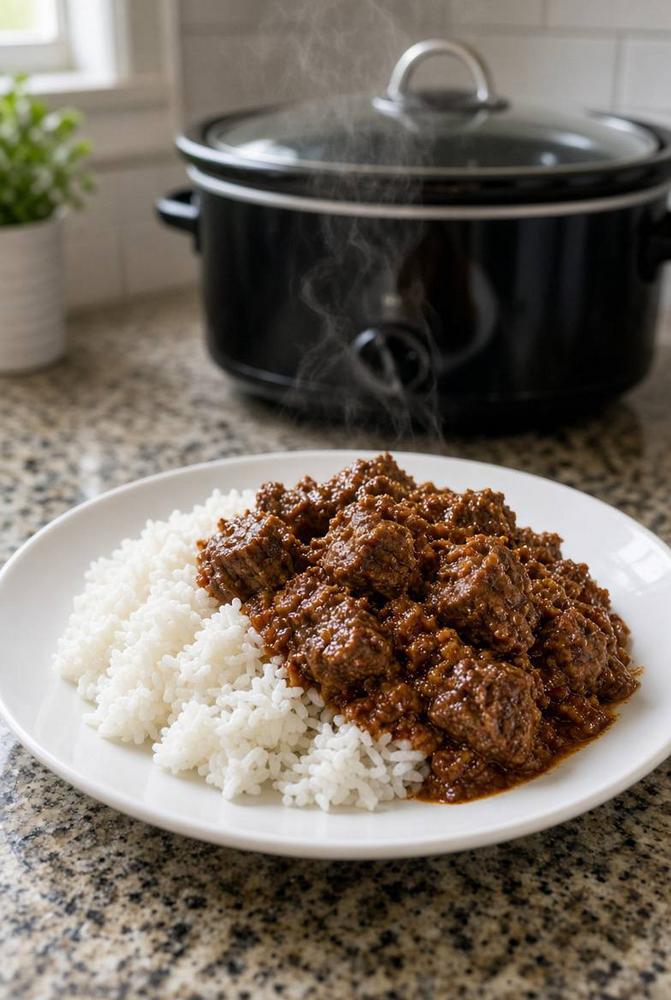
Imagine a dish so rich, so aromatic, and so profoundly flavorful that it transports you to the bustling streets of Southeast Asia with just one bite. That, my friends, is Rendang. This iconic Indonesian and Malaysian curry, traditionally a labor of love simmered for hours over an open fire, has been revered for centuries as a celebratory dish, a symbol of hospitality, and a testament to the region’s incredible spice heritage. Our Crockpot Fragrant Coconut Beef Rendang takes all the magic of this culinary masterpiece and distills it into an effortlessly convenient slow-cooked sensation, perfect for today’s busy kitchens.
Rendang isn’t just any curry; it’s a slow-cooked symphony of flavors where tender beef is bathed in a thick, intensely spiced gravy that has been meticulously reduced until it clings to every morsel. The “fragrant coconut beef” in our title isn’t just a catchy phrase—it’s the essence of this dish. Picture succulent chunks of beef, infused with a complex blend of aromatic spices, luxuriating in a creamy, rich coconut milk reduction that deepens in flavor and color as it slowly cooks. The beauty of using a Crockpot for this recipe is that it allows you to achieve that traditional depth and tenderness without the constant stirring and vigilant oversight, making it an ideal choice for impressive gatherings or simply elevating a weeknight meal.
What makes this Crockpot Rendang truly special is its ability to deliver authentic, slow-cooked perfection with minimal fuss. The low and slow heat of the Crockpot breaks down tougher cuts of beef into fork-tender submission, while allowing the myriad of spices—from fiery chilies and pungent garlic to fragrant lemongrass and earthy turmeric—to meld into a harmonious, unforgettable sauce. The result is a dish that is deeply savory, subtly sweet, and wonderfully aromatic, showcasing the best of Indonesian and Malaysian culinary traditions right in your own kitchen. Get ready to embark on a culinary journey that promises a delicious reward with every spoonful.
Nutritional Information
Per serving (approximate values):
- Calories: 680
- Protein: 45g
- Carbohydrates: 35g
- Fat: 40g
- Fiber: 5g
- Sodium: 720mg
Ingredients
- 2.5 lbs beef chuck roast, cut into 1.5-2 inch cubes
- 2 tablespoons coconut oil or vegetable oil
- 2 cans (13.5 oz each) full-fat coconut milk
- 1 cup water or beef broth
- 4 kaffir lime leaves, torn
- 2 stalks lemongrass, bruised (white parts only)
- 1 cinnamon stick (about 2 inches)
- 2 star anise pods
- 1 teaspoon tamarind paste, mixed with 2 tablespoons hot water (optional, for tang)
- 1 tablespoon palm sugar or brown sugar, to taste
- 1 teaspoon salt, or to taste
- Fresh cilantro or fried shallots, for garnish (optional)
For the Rendang Spice Paste:
- 10-12 dried red chilies (or 5-7 fresh red chilies), soaked in hot water until soft, stems removed
- 8-10 shallots, peeled and roughly chopped
- 6 cloves garlic, peeled
- 2 inch piece ginger, peeled and roughly chopped
- 2 inch piece galangal, peeled and roughly chopped
- 2 stalks lemongrass (white part only), roughly chopped
- 1 teaspoon turmeric powder (or 1 inch fresh turmeric, peeled)
- 1 tablespoon coriander powder
- 1 teaspoon cumin powder
- 1/2 teaspoon fennel powder
- 1/4 teaspoon nutmeg powder
- A pinch of cloves (2-3 whole cloves)
- 1/4 cup water or coconut milk, for blending
Instructions
- Prepare the Beef: Pat the beef cubes dry with paper towels. Season generously with salt and pepper.
- Make the Spice Paste: If using dried chilies, soak them in hot water for 15-20 minutes until softened. Drain well. Combine all spice paste ingredients (chilies, shallots, garlic, ginger, galangal, lemongrass, turmeric, coriander, cumin, fennel, nutmeg, cloves, and 1/4 cup water or coconut milk) in a food processor or blender. Blend until a smooth, thick paste forms. Add a little more liquid if needed, but keep it as thick as possible.
- Sear the Beef (Optional but Recommended): Heat 1 tablespoon of coconut oil in a large skillet or Dutch oven over medium-high heat. Working in batches, sear the beef cubes on all sides until nicely browned. This step adds a crucial layer of flavor. Remove the seared beef and set aside.
- Sauté the Spice Paste: Add the remaining 1 tablespoon of coconut oil to the same skillet (or add fresh oil if needed). Reduce heat to medium. Add the prepared spice paste and sauté for 8-10 minutes, stirring frequently, until very fragrant and the oil separates from the paste. This step is crucial for developing the deep flavors of the rendang.
- Combine in the Crockpot: Transfer the seared beef (if using) and the sautéed spice paste to your slow cooker.
- Add Liquids and Aromatics: Pour in the two cans of full-fat coconut milk and the water or beef broth. Add the torn kaffir lime leaves, bruised lemongrass stalks, cinnamon stick, and star anise pods. Stir everything gently to combine.
- Slow Cook: Cover the Crockpot and cook on LOW for 6-8 hours, or on HIGH for 3-4 hours, or until the beef is fork-tender. The cooking time may vary depending on your slow cooker.
- Reduce and Thicken: Once the beef is tender, carefully remove the kaffir lime leaves, lemongrass stalks, cinnamon stick, and star anise pods. If the sauce is too thin for your liking (authentic rendang has a very thick, almost dry gravy), you have a few options:
- Option 1 (Crockpot Reduction): Remove the lid and continue cooking on HIGH for another 1-2 hours, stirring occasionally, until the sauce thickens and reduces to your desired consistency.
- Option 2 (Stovetop Reduction): Carefully transfer the rendang to a large pot or Dutch oven on the stovetop. Bring to a simmer over medium-high heat and cook, stirring frequently, until the sauce thickens and reduces. This method is faster and offers more control.
- Final Seasoning: Stir in the tamarind paste mixture (if using) and the palm sugar or brown sugar. Taste and adjust salt and sugar as needed. The sauce should be rich, savory, and have a slight sweetness to balance the spices. Continue to cook, stirring, until the sauce has thickened and coats the beef beautifully, and the oil starts to separate, indicating a well-reduced rendang.
- Serve: Ladle the Crockpot Fragrant Coconut Beef Rendang over fluffy white rice. Garnish with fresh cilantro or fried shallots if desired.
Cooking Tips and Variations
Achieving the perfect Rendang is all about patience and attention to detail, even in a slow cooker. Here are some tips to ensure your dish is nothing short of spectacular, along with some variations to explore:
Tips for the Best Beef Rendang
- Meat Selection is Key: For slow cooking, choose tougher cuts of beef that break down beautifully over time. Chuck roast is an excellent choice, as are beef short ribs or stew meat. These cuts become incredibly tender and absorb the flavors of the spice paste wonderfully. Avoid lean cuts like sirloin, which can become dry.
- Don’t Skip the Spice Paste Sauté: Sautéing the spice paste for 8-10 minutes until aromatic and the oil separates is a non-negotiable step. This process, known as “pecah minyak” in Malay, deepens the flavor of the spices, removes raw notes, and creates the foundation for that rich, complex rendang taste. It’s where the magic truly begins!
- Full-Fat Coconut Milk for Richness: Always opt for full-fat coconut milk. The fat content is essential for the creamy texture and the reduction process that gives rendang its characteristic richness and sheen. Light coconut milk will result in a thinner, less satisfying sauce.
- The “Dry” Rendang Consistency: Traditional rendang is not soupy; it’s a thick, almost dry curry where the sauce clings tightly to the meat. The slow cooker will produce a good amount of liquid. To achieve the authentic “dry” consistency, you absolutely must reduce the sauce. As described in the instructions, removing the lid for the last hour or two of slow cooking or transferring to a stovetop pot for a vigorous simmer are the best ways to achieve this. Don’t be afraid to let it reduce until the oil starts to separate and the sauce is a deep, rich color.
- Bruising Lemongrass: To release the aromatic oils from lemongrass, bruise the stalks by hitting them with the back of a knife or a rolling pin before adding them to the pot. This helps infuse the dish with its distinctive citrusy, herbaceous notes.
- Tamarind Paste for Balance: While optional, a touch of tamarind paste adds a subtle tang that beautifully balances the richness of the coconut milk and the heat of the chilies. It provides a complexity that elevates the overall flavor profile.
- Taste and Adjust: Always taste your rendang before serving. Adjust the salt, palm sugar, and even a squeeze of lime juice if you feel it needs a little more brightness. Flavors can mellow or intensify during slow cooking.
Recipe Variations
- Spicy Rendang: For those who love heat, increase the number of fresh red chilies or add a few bird’s eye chilies to the spice paste. You can also add a pinch of chili flakes during the final reduction.
- Chicken or Lamb Rendang: While beef is traditional, this recipe works wonderfully with other proteins. For chicken rendang, use boneless, skinless chicken thighs and reduce the slow cooking time to 3-4 hours on low, or 1.5-2 hours on high, ensuring the chicken is cooked through but not overcooked. For lamb rendang, use lamb shoulder or leg, cut into cubes, and follow the beef cooking times.
- Vegetarian Rendang: You can adapt this recipe for a vegetarian version by using firm tofu, tempeh, or a mix of hearty vegetables like jackfruit, potatoes, and eggplant. Adjust cooking times accordingly, as these will cook much faster than beef. The rich spice paste and coconut milk base will still deliver incredible flavor.
- Nutty Rendang: For an extra layer of texture and richness, consider adding 1/4 cup of toasted desiccated coconut (kerisik) during the final reduction phase. Kerisik is a common rendang ingredient and contributes a wonderful nutty flavor and helps thicken the sauce further.
- Pressure Cooker Rendang: If you’re short on time, this recipe can be adapted for a pressure cooker. After sautéing the spice paste and searing the beef, combine all ingredients in the pressure cooker and cook on high pressure for 45-60 minutes, followed by a natural release. Then, transfer to a pot to reduce the sauce until thick.
Storage and Reheating
One of the many wonderful things about Rendang is that it often tastes even better the next day, as the flavors have more time to meld and deepen. This makes it an excellent meal prep option or a fantastic dish to make ahead for entertaining.
Storage:
- Refrigeration: Allow the Crockpot Fragrant Coconut Beef Rendang to cool completely before transferring it to an airtight container. Store in the refrigerator for up to 3-4 days. The sauce may thicken further when cold.
- Freezing: Rendang freezes exceptionally well. Once cooled, portion the rendang into freezer-safe containers or heavy-duty freezer bags. Remove as much air as possible to prevent freezer burn. It can be stored in the freezer for up to 3 months. Thaw overnight in the refrigerator before reheating.
Reheating:
- Stovetop: The best way to reheat rendang is on the stovetop. Transfer the desired amount to a pot or skillet over medium-low heat. Add a splash of water or coconut milk (about 1-2 tablespoons per serving) if the sauce has become too thick. Stir occasionally, gently breaking up any clumps, until heated through and simmering. This method allows the flavors to re-develop and the sauce to return to its luscious consistency.
- Microwave: For individual servings, rendang can be reheated in the microwave. Place in a microwave-safe dish, cover loosely, and heat on medium power in 1-2 minute intervals, stirring between each, until piping hot. Be mindful not to overheat, as this can dry out the beef.
- Slow Cooker (for large batches): If reheating a large quantity, you can return it to the slow cooker on the “warm” setting for an hour or two, or on “low” for 30-60 minutes, stirring occasionally, until thoroughly heated. This is ideal if you’re serving it for a gathering.
When reheating, always ensure the rendang is heated through to a safe internal temperature. If the sauce seems too dry, a little extra coconut milk or water can help bring it back to life.
Frequently Asked Questions
What is the difference between Rendang and other curries?
Rendang stands apart from many other curries primarily due to its unique cooking process and resulting consistency. Unlike a typical curry that has a soupy or saucy gravy, authentic Rendang is cooked until almost all the liquid has evaporated, leaving a very thick, rich, and intensely flavored paste that clings to the meat. This reduction process, often referred to as “dry curry,” concentrates the spices and coconut milk, giving Rendang a distinct texture and a deeper, more complex flavor profile that is less about a liquid sauce and more about a coating of aromatic goodness. It’s also characterized by its extensive use of fresh aromatics and the caramelization of the coconut milk.
Can I make the spice paste ahead of time?
Absolutely! Preparing the spice paste in advance is an excellent way to save time on cooking day. You can blend all the spice paste ingredients and store the paste in an airtight container in the refrigerator for up to 3-4 days. For longer storage, the spice paste can be frozen for up to a month. When you’re ready to cook, simply thaw the paste (if frozen) and proceed with sautéing it as directed in the instructions. This makes the Crockpot Rendang even more convenient for busy weeknights.
What should I serve with Crockpot Fragrant Coconut Beef Rendang?
The traditional and most common accompaniment for Rendang is plain white rice, such as jasmine or basmati rice. The mild flavor of the rice perfectly complements the rich and intense flavors of the rendang, allowing you to savor every bite. Other delicious pairings include fluffy roti or paratha, which are excellent for soaking up any remaining sauce. For a balanced meal, you might also consider serving it with a simple, refreshing side like a cucumber salad, some steamed green beans, or a side of sambal (chili paste) for an extra kick.
Why is my Rendang sauce not thickening?
If your Rendang sauce isn’t thickening to the desired consistency, it’s likely due to insufficient reduction. The slow cooker, especially with the lid on, can retain a lot of moisture. To achieve the thick, “dry” rendang, you need to allow the liquid to evaporate. As mentioned in the instructions, remove the lid for the final 1-2 hours of cooking on high, or transfer the rendang to a large pot on the stovetop and simmer vigorously, stirring frequently, until the sauce reduces significantly and coats the beef beautifully. Patience is key here; the sauce will thicken as more liquid evaporates and the coconut milk fat separates and caramelizes, creating that iconic rich texture.