Introduction
Craving the rich, savory, and slightly sweet flavors of authentic Korean Bulgogi but dreading the hands-on grilling or stir-frying? Get ready to have your weeknight dinner dreams come true with this incredible Crockpot Korean Beef Bulgogi recipe! Bulgogi, meaning “fire meat,” is a beloved Korean dish traditionally made with thinly sliced marinated beef, grilled or pan-fried to perfection. It’s renowned for its incredible depth of flavor, achieved through a magical marinade that balances soy sauce, sesame oil, garlic, ginger, and a touch of sweetness. While the traditional method is undeniably delicious, it often requires constant attention, making it less ideal for those busy days when you just want a comforting, flavorful meal without the fuss. That’s where your trusty slow cooker steps in to save the day, transforming a classic into an effortless culinary masterpiece.
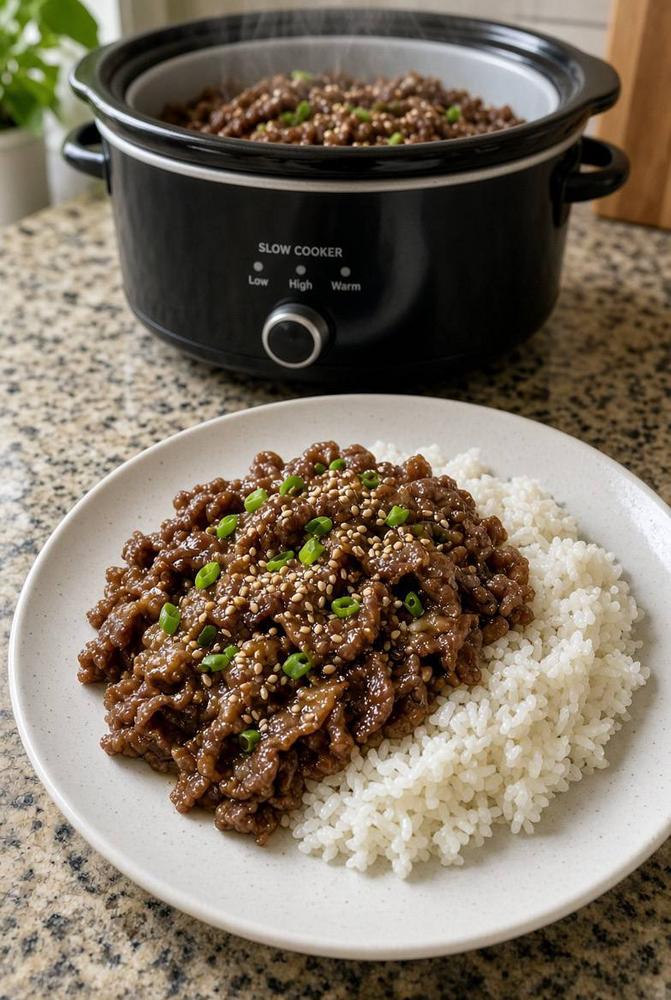
This Crockpot Korean Beef Bulgogi takes all the iconic flavors you love and translates them into a convenient, set-it-and-forget-it meal. Imagine coming home to the intoxicating aroma of tender beef, slow-cooked in a deeply savory, glossy sauce that practically melts in your mouth. The slow cooker works its magic, breaking down the beef to an unparalleled tenderness, while allowing the vibrant marinade flavors to truly permeate every single strand. The result is a dish that’s incredibly satisfying, bursting with umami, and perfect for serving over a bed of fluffy white rice, topped with fresh green onions and toasted sesame seeds. It’s a family-friendly meal that delivers maximum flavor with minimal effort, making it an instant favorite for busy weeknights, meal prep, or simply when you’re craving a taste of Korea right in your own kitchen.
Whether you’re new to Korean cuisine or a seasoned fan, this slow cooker rendition offers an accessible and foolproof way to enjoy one of Korea’s most famous dishes. It’s designed to bring the complex, restaurant-quality taste of Bulgogi to your dinner table with the ease and comfort only a crockpot can provide. Get ready to experience deeply tender beef, infused with a harmonious blend of savory and sweet notes, all cooked to perfection while you go about your day. This recipe promises a deeply satisfying meal that’s both comforting and exciting, proving that incredible flavor doesn’t always have to come with a hefty time commitment. Prepare to be amazed by how simple it is to create such a profoundly delicious dish!
Nutritional Information
Per serving (approximate values):
- Calories: 480
- Protein: 40g
- Carbohydrates: 35g
- Fat: 20g
- Fiber: 2g
- Sodium: 1200mg
Ingredients
- 2-3 pounds boneless beef sirloin, ribeye, or chuck roast, thinly sliced against the grain
- 1/2 cup low-sodium soy sauce
- 1/4 cup brown sugar (packed) or honey
- 2 tablespoons sesame oil
- 1 tablespoon rice vinegar
- 1 Asian pear or small apple, grated or pureed (about 1/4 cup)
- 4 cloves garlic, minced
- 1 tablespoon fresh ginger, grated
- 1/2 small yellow onion, grated or finely minced
- 1/2 teaspoon black pepper
- 1/4 teaspoon red pepper flakes (optional, for a hint of heat)
- 2 tablespoons cornstarch (optional, for thickening the sauce)
- 2 tablespoons cold water (optional, for cornstarch slurry)
- 2 green onions, sliced, for garnish
- 1 tablespoon toasted sesame seeds, for garnish
- Cooked white rice, for serving
Instructions
- Prepare the Beef: If your beef isn’t already thinly sliced, you’ll want to do this first. For easier slicing, place the beef in the freezer for 30-45 minutes to firm it up slightly. Using a sharp knife, slice the beef against the grain into very thin pieces, about 1/8 to 1/4 inch thick. Trim any excess fat if desired.
- Make the Marinade: In a medium bowl, whisk together the soy sauce, brown sugar (or honey), sesame oil, rice vinegar, grated Asian pear (or apple), minced garlic, grated ginger, grated onion, black pepper, and red pepper flakes (if using). Whisk until the sugar is dissolved and all ingredients are well combined.
- Marinate the Beef (Optional but Recommended): Place the thinly sliced beef into a large bowl or a resealable bag. Pour the prepared marinade over the beef, ensuring all pieces are well coated. For best flavor, cover and refrigerate for at least 30 minutes, or ideally 2-4 hours, or even overnight. If you’re short on time, you can proceed directly to the next step, but marinating enhances the depth of flavor significantly.
- Add to Slow Cooker: Transfer the marinated beef and all of the marinade liquid into your slow cooker. Spread the beef out evenly as much as possible.
- Cook: Cover the slow cooker with its lid. Cook on LOW for 4-6 hours or on HIGH for 2-3 hours, or until the beef is incredibly tender and easily shredded with a fork. The exact cooking time will depend on your slow cooker and the thickness of your beef.
- Thicken the Sauce (Optional): If you prefer a thicker sauce, you can do this step about 15-20 minutes before serving. In a small bowl, whisk together the cornstarch and cold water to create a smooth slurry. Stir the slurry into the slow cooker with the beef and sauce. Continue to cook on high for another 15-20 minutes, stirring occasionally, until the sauce has thickened to your desired consistency.
- Serve: Once cooked, give the beef and sauce a good stir. Taste and adjust seasonings if necessary (you might want a pinch more salt or a dash more sesame oil). Serve the Crockpot Korean Beef Bulgogi hot over freshly cooked white rice.
- Garnish: Finish each serving with a generous sprinkle of sliced green onions and toasted sesame seeds for added freshness and flavor.
Cooking Tips and Variations
Achieving the perfect Crockpot Korean Beef Bulgogi is all about a few key techniques and knowing how to customize it to your taste. For starters, the type of beef you choose and how you prepare it makes a big difference. While sirloin and ribeye are excellent for their tenderness and flavor, a well-marbled chuck roast, thinly sliced, will also yield incredibly tender results from the slow cooking process. Remember the trick of freezing the beef for 30-45 minutes before slicing; it makes it much easier to get those signature thin, uniform slices against the grain, which are crucial for the beef to absorb the marinade and cook quickly to a melt-in-your-mouth texture. Don’t skip the Asian pear or apple in the marinade; this isn’t just for sweetness. The enzymes in the fruit act as a natural tenderizer, helping to break down the beef fibers, contributing to that signature Bulgogi tenderness.
When it comes to the marinade, don’t be afraid to taste it before adding the beef. This allows you to adjust the balance of sweet, savory, and umami to your preference. If you like it sweeter, add a touch more brown sugar or honey. For more umami, a splash of fish sauce can be a secret weapon, though it’s not traditional for Bulgogi. If you enjoy a bit of heat, increase the red pepper flakes or add a teaspoon of gochujang (Korean chili paste) to the marinade for a spicier kick. For an extra layer of flavor, consider adding a few dried shiitake mushrooms (rehydrated and sliced) to the slow cooker along with the beef. They’ll infuse the sauce with a deep, earthy umami that complements the beef beautifully. You can also add thinly sliced yellow onion and sliced carrots to the slow cooker during the last hour of cooking if you want to incorporate more vegetables directly into the dish; they’ll soften and absorb the delicious sauce.
Another excellent variation is to turn this into a Bulgogi “bowl” or “taco” night. Instead of just rice, offer a variety of toppings like shredded lettuce, quick-pickled cucumbers, kimchi, or even a fried egg. For a low-carb option, serve it over cauliflower rice or in lettuce wraps. If you find the sauce isn’t as thick as you’d like after cooking, the cornstarch slurry is your best friend. Always mix cornstarch with cold water before adding it to hot liquid to prevent lumps. Stir it in gradually and allow it to cook for a few minutes to thicken. Conversely, if the sauce is too thick, a splash of beef broth or water can thin it out. Lastly, while the slow cooker is fantastic for tenderness, if you want a slight char or caramelized edge on your beef (mimicking traditional grilling), you can transfer the cooked beef (drained from most of the sauce) to a hot pan or under a broiler for a few minutes after slow cooking, then toss it back with the thickened sauce before serving. This adds an extra dimension of texture and flavor that some people love.
Storage and Reheating
Proper storage and reheating are key to enjoying your Crockpot Korean Beef Bulgogi leftovers just as much as the first time. Once the dish has cooled down to room temperature (within two hours of cooking), transfer it to an airtight container. Make sure to include plenty of the delicious sauce, as this will help keep the beef moist and flavorful during storage. It can be safely stored in the refrigerator for up to 3-4 days. For longer storage, Crockpot Korean Beef Bulgogi freezes exceptionally well. Portion the cooled beef and sauce into freezer-safe containers or heavy-duty freezer bags. Label with the date. It will maintain its quality in the freezer for up to 2-3 months. When ready to use, thaw frozen Bulgogi overnight in the refrigerator before reheating.
When it comes to reheating, you have a few excellent options, depending on how much you’re reheating and your preferred method. For individual servings, the microwave is the quickest and most convenient. Place the desired amount of Bulgogi (beef and sauce) in a microwave-safe dish, cover loosely, and heat on high for 1-2 minutes, stirring halfway through, until thoroughly heated. Be careful not to overheat, as this can dry out the beef. If reheating a larger batch or if you prefer a stovetop method, transfer the Bulgogi to a saucepan or skillet over medium-low heat. Add a splash of water or beef broth if the sauce seems too thick or dry. Stir occasionally until the beef is heated through and the sauce is bubbling gently. This method helps retain moisture and can even re-develop some of the flavors. For best results, avoid aggressively boiling the sauce, as this can toughen the beef. Always ensure the internal temperature of the beef reaches 165°F (74°C) when reheating.
If you’re reheating from frozen, it’s best to thaw it in the refrigerator first. Once thawed, you can follow the microwave or stovetop instructions. You can also reheat directly from frozen in the slow cooker on the “warm” setting, though this will take several hours. This method is excellent if you’re planning to serve it again for a gathering and want it to stay warm. A final tip: if you’re reheating in a pan, a quick sauté with some fresh vegetables like sliced bell peppers or onions can add a fresh element to your leftovers. No matter the method, a fresh sprinkle of green onions and sesame seeds before serving will always elevate the dish, making those leftovers feel just as special as the original meal.
Frequently Asked Questions
What kind of beef is best for Crockpot Korean Beef Bulgogi?
For Crockpot Korean Beef Bulgogi, boneless beef sirloin, ribeye, or even a well-marbled chuck roast are excellent choices. The key is to slice the beef very thinly against the grain, about 1/8 to 1/4 inch thick. Sirloin and ribeye are naturally tender and absorb the marinade beautifully, while chuck roast, though a tougher cut, becomes incredibly tender and flavorful when slow-cooked for several hours, making it a budget-friendly and delicious option for the slow cooker.
Can I prepare the marinade ahead of time?
Absolutely! The marinade can be prepared a day or two in advance and stored in an airtight container in the refrigerator. This can be a great time-saver on cooking day. You can also combine the beef and marinade together up to 24 hours in advance, allowing the beef to marinate overnight in the refrigerator. The longer the beef marinates, the more deeply the flavors will penetrate, resulting in an even more delicious and tender final dish.
Do I need to brown the beef before putting it in the slow cooker?
No, you do not need to brown the beef before adding it to the slow cooker for this recipe. One of the great advantages of slow cooking is the minimal prep required. The beef will cook perfectly and become incredibly tender directly in the marinade within the slow cooker. While browning can add an extra layer of flavor from caramelization, it’s not necessary for this particular slow cooker method, which prioritizes convenience and achieves deep flavor through long, gentle cooking.
Can I add vegetables to the slow cooker with the beef?
Yes, you can definitely add vegetables to the slow cooker! Sliced yellow onions, mushrooms, and carrots are popular additions. If you want them to retain a bit of texture, add them during the last 1-2 hours of cooking on low, or the last 30-60 minutes on high, so they don’t become too mushy. If you prefer them very soft and fully infused with the sauce, you can add them from the beginning with the beef. Bell peppers can also be added towards the end for color and a slight crunch.