Introduction
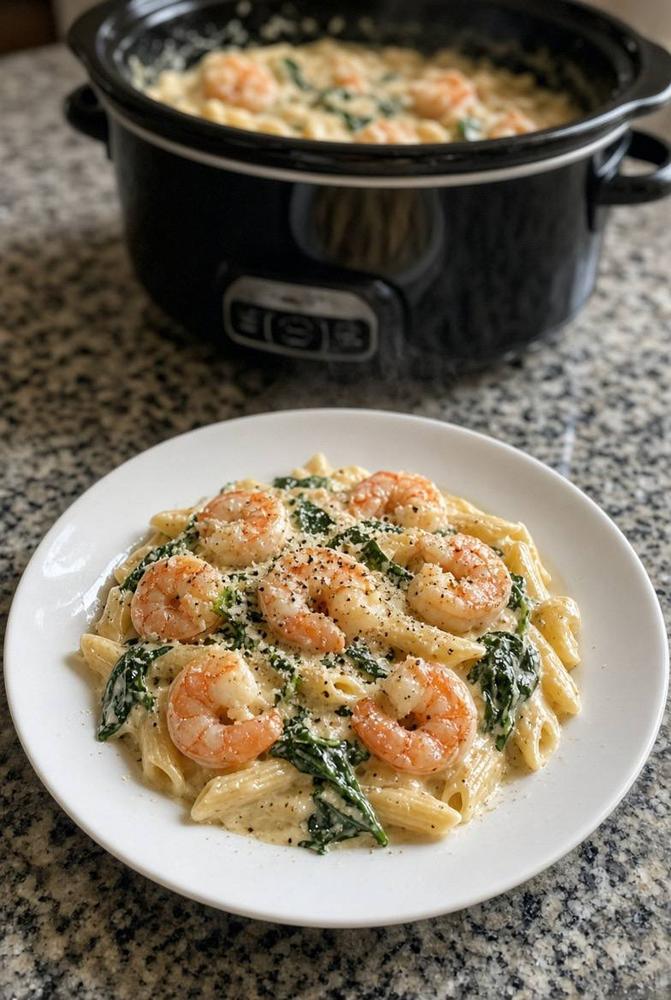
Imagine coming home after a long, busy day, the aroma of a delicious, comforting meal already filling your kitchen. That’s the magic of our Slow Cooker Creamy Garlic Parmesan Shrimp Pasta! This dish is a true weeknight hero, delivering an incredibly rich, savory, and satisfying meal with minimal effort. It’s the kind of pasta that hugs you from the inside out, boasting tender penne, plump shrimp, and a luscious, garlicky Parmesan cream sauce that will have everyone asking for seconds. Say goodbye to last-minute dinner stress and hello to a meal that practically cooks itself.
What makes this recipe truly special is the “set it and forget it” convenience of the slow cooker combined with a flavor profile that tastes like it took hours of dedicated cooking. We’re talking about aromatic garlic infusing every bite, the salty, nutty goodness of Parmesan cheese melting into a velvety sauce, and perfectly cooked shrimp adding a delightful pop of protein. Plus, we sneak in some fresh spinach for a touch of vibrant color and added nutrition. This isn’t just another pasta dish; it’s a culinary embrace, an easy win for any busy evening, and a guaranteed crowd-pleaser that will quickly become a staple in your recipe rotation.
Whether you’re feeding a family or simply craving a hearty, flavorful meal without the fuss, this Slow Cooker Creamy Garlic Parmesan Shrimp Pasta delivers on all fronts. It’s an Italian-inspired comfort food that’s hearty, savory, and incredibly family-friendly. Get ready to experience the joy of effortless cooking and the sheer delight of a truly delicious, one-pot (mostly) wonder that tastes like pure indulgence.
Nutritional Information
Per serving (approximate values):
- Calories: 580
- Protein: 40g
- Carbohydrates: 65g
- Fat: 20g
- Fiber: 5g
- Sodium: 850mg
Ingredients
- 1 lb large shrimp, peeled, deveined, tails removed
- 1 tbsp olive oil
- 1 large yellow onion, finely chopped
- 4-5 cloves garlic, minced
- 4 cups chicken broth (low sodium recommended)
- 1 (14.5 oz) can diced tomatoes, undrained
- 1 tsp dried Italian seasoning
- 1/2 tsp red pepper flakes (optional, for a little heat)
- 1 lb penne pasta, uncooked
- 1 cup heavy cream
- 1 cup grated Parmesan cheese, plus more for garnish
- 5 oz fresh spinach
- Salt and freshly ground black pepper to taste
- Fresh parsley, chopped, for garnish (optional)
Instructions
- Pat the shrimp dry with paper towels. In a medium bowl, toss the shrimp with 1 tablespoon of olive oil, 1 minced garlic clove, and a pinch of salt and pepper. Set aside.
- Add the chopped onion to the bottom of a 6-quart or larger slow cooker.
- Evenly sprinkle the remaining minced garlic over the onions.
- Pour in the chicken broth and diced tomatoes (with their juices).
- Stir in the dried Italian seasoning and red pepper flakes (if using).
- Add the uncooked penne pasta to the slow cooker, ensuring it is mostly submerged in the liquid. Do not stir excessively at this point to prevent the pasta from sticking together.
- Cover the slow cooker and cook on LOW for 2.5 to 3 hours, or on HIGH for 1.5 to 2 hours, or until the pasta is al dente. The exact cooking time can vary based on your slow cooker and pasta brand, so check for tenderness.
- Once the pasta is nearly cooked, remove the lid. Stir in the heavy cream and 1 cup of grated Parmesan cheese until well combined and the sauce begins to thicken.
- Gently fold in the seasoned shrimp and fresh spinach.
- Cover and cook for an additional 15-20 minutes on HIGH, or until the shrimp are pink and opaque and the spinach has wilted. Be careful not to overcook the shrimp, as they can become rubbery quickly.
- Taste the pasta and season with additional salt and freshly ground black pepper as needed.
- Serve immediately, garnished with extra grated Parmesan cheese and fresh chopped parsley, if desired.
Cooking Tips and Variations
For perfectly cooked shrimp that are tender and juicy, timing is crucial. Adding them too early in the slow cooking process will result in a rubbery texture. It’s best to stir them in during the last 15-20 minutes of cooking, allowing them just enough time to turn pink and opaque. If you prefer, you can even quickly sauté the shrimp separately in a pan and stir them into the pasta right before serving for ultimate control over their texture.
When it comes to pasta, not all shapes are created equal for slow cooker recipes. Sturdy, medium-sized pasta shapes like penne, rotini, or rigatoni work best as they hold up well to the longer cooking times without becoming mushy. Avoid delicate pasta like angel hair or small elbow macaroni, which can overcook quickly. For best results, ensure the pasta is mostly submerged in the liquid at the start of cooking to cook evenly.
Achieving the perfect creamy consistency for your sauce is key. If your sauce appears too thick after cooking, you can thin it out with a splash of warm milk, chicken broth, or even some reserved pasta water until it reaches your desired consistency. Conversely, if the sauce is too thin, you can stir in an extra handful of grated Parmesan cheese, which will help thicken it as it melts. For a thicker sauce, you could also make a quick cornstarch slurry (1 tablespoon cornstarch mixed with 2 tablespoons cold water) and stir it into the hot sauce during the last 10 minutes of cooking, allowing it to simmer and thicken.
To boost the flavor profile even further, consider adding a squeeze of fresh lemon juice at the very end of cooking; its acidity brightens the rich sauce beautifully. A pinch of nutmeg can also enhance the creaminess and warmth of the Parmesan. Fresh herbs like basil or oregano, added along with the spinach, will provide a more vibrant, aromatic touch. For a little extra kick, increase the red pepper flakes or add a dash of cayenne pepper. You can also experiment with different cheeses; a blend of Parmesan and Pecorino Romano will add a sharper, saltier depth.
This recipe is also incredibly versatile. While shrimp is fantastic, you could easily substitute it with cooked, shredded chicken or even Italian sausage for a different protein. For more vegetables, consider adding diced bell peppers, mushrooms, or zucchini along with the onions at the beginning of the cooking process. Just be mindful that some vegetables release a lot of water, which might slightly alter the sauce consistency. This is a wonderfully adaptable dish that encourages you to play with flavors and ingredients to suit your preferences.
Storage and Reheating
This Slow Cooker Creamy Garlic Parmesan Shrimp Pasta makes for delicious leftovers, though the pasta will continue to absorb sauce and may become softer. To store, allow the pasta to cool completely before transferring it to an airtight container. It can be refrigerated for up to 3-4 days. We do not recommend freezing this dish, as the creamy sauce can separate and the pasta texture can become unappealing upon thawing and reheating.
When reheating, the pasta will likely be thicker and less saucy than when freshly made. For best results, reheat individual portions in the microwave or on the stovetop over medium-low heat. If using the microwave, heat in 1-minute intervals, stirring in between, until warmed through. On the stovetop, place the pasta in a saucepan with a splash of milk or chicken broth (1/4 to 1/2 cup per serving) to help rehydrate the sauce and prevent it from drying out. Stir frequently until heated through. Do not overheat, as this can make the shrimp rubbery. Freshly grated Parmesan cheese can be stirred in or sprinkled on top after reheating to restore some of the creamy, cheesy goodness.
Frequently Asked Questions
Can I use frozen shrimp for this recipe?
Yes, you can definitely use frozen shrimp. Make sure to thaw them completely before adding them to the slow cooker. Pat them very dry with paper towels after thawing to remove excess moisture, which helps the seasoning stick and prevents the sauce from becoming watery. Add them at the same time as fresh shrimp, during the last 15-20 minutes of cooking, to ensure they don’t overcook.
What if my pasta isn’t cooked through after the recommended time?
Slow cooker cooking times can vary significantly depending on the make and model of your appliance, as well as the specific brand and type of pasta. If your pasta isn’t cooked through, simply cover the slow cooker again and continue cooking for another 15-30 minutes, checking periodically until it reaches your desired al dente tenderness. Ensure there’s still enough liquid; if it looks dry, add another splash of broth or water.
Can I make this recipe dairy-free or gluten-free?
Making this recipe dairy-free is challenging due to the heavy cream and Parmesan cheese which are central to the “creamy” and “Parmesan” aspects. You could experiment with dairy-free heavy cream alternatives and nutritional yeast for a cheesy flavor, but the texture and taste will be different. For a gluten-free version, simply substitute the regular penne pasta with your favorite gluten-free penne or other sturdy gluten-free pasta. Ensure all other ingredients, like broth, are certified gluten-free.