Instructions
- Prepare the Potatoes: Thoroughly wash the potatoes, scrubbing off any dirt. Using a mandoline or a very sharp knife, slice the potatoes into uniform 1/8-inch thick rounds or wedges. If slicing by hand, try to keep the thickness consistent for even cooking. Place the sliced potatoes in a large bowl and set aside.
- Preheat Oven and Prepare Baking Dish: Preheat your oven to 375°F (190°C). Lightly grease a 9×13-inch baking dish (or similar 3-quart capacity dish) with butter or cooking spray.
- Start the Cheesy Sauce Base: In a large saucepan or Dutch oven, melt the 4 tablespoons of unsalted butter over medium heat. Add the finely minced yellow onion and sauté for 5-7 minutes until softened and translucent, being careful not to brown.
- Add Aromatics: Stir in the minced garlic and cook for another minute until fragrant.
- Create the Roux: Sprinkle the 1/4 cup of all-purpose flour over the sautéed onions and garlic. Cook, stirring constantly, for 1-2 minutes to create a roux. This helps to cook out the raw flour taste and will thicken the sauce.
- Whisk in Liquids: Gradually whisk in the warmed whole milk and heavy cream, a little at a time, ensuring no lumps form. Continue whisking until the sauce is smooth and begins to thicken, about 5-7 minutes. Bring the sauce to a gentle simmer.
- Season the Sauce: Remove the saucepan from the heat. Stir in the Dijon mustard, freshly grated nutmeg, salt, and black pepper. Taste and adjust seasonings as needed.
- Melt the Cheese: Add the shredded Gruyere cheese, shredded sharp cheddar cheese, and 1/2 cup of grated Parmesan cheese to the sauce. Stir gently until all the cheese has melted and the sauce is creamy and smooth.
- Add Mix-ins to Sauce: Fold in the toasted chopped walnuts, chopped fresh parsley, and chopped fresh chives into the cheesy sauce. This adds incredible flavor and texture.
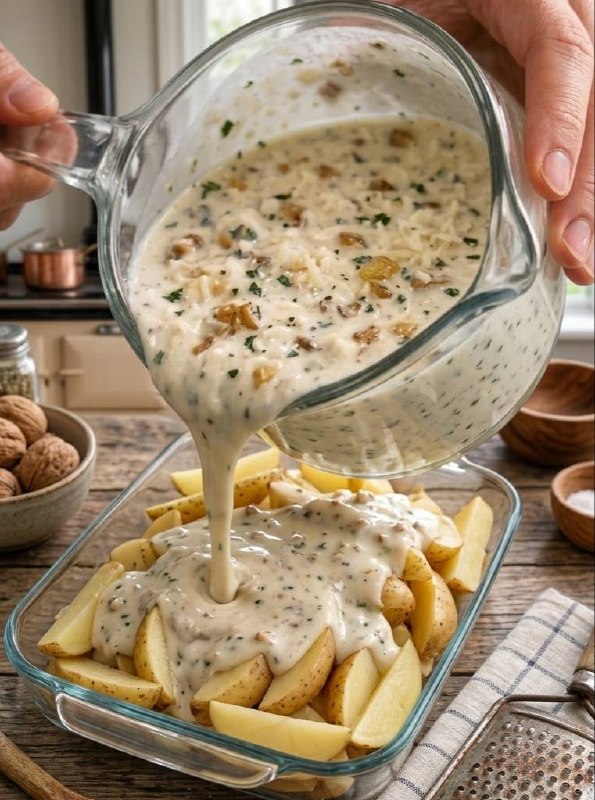
- Assemble the Dish: Arrange about one-third of the sliced potatoes in a single, slightly overlapping layer at the bottom of the prepared baking dish. Pour about one-third of the cheesy sauce evenly over the potatoes. Repeat this layering process two more times, ending with a generous layer of sauce on top. Ensure the potatoes are mostly submerged in the sauce.
- Bake the Scalloped Potatoes: Cover the baking dish tightly with aluminum foil. Bake for 40 minutes.
- Finish Baking: Remove the foil, sprinkle a little extra grated Parmesan cheese over the top for an even richer crust, and continue baking uncovered for another 20-25 minutes, or until the potatoes are fork-tender, the sauce is bubbly, and the top is golden brown and slightly crispy. If the top starts to brown too quickly, you can loosely tent it with foil again.
- Rest Before Serving: Once baked, remove the dish from the oven and let it rest for at least 10-15 minutes before serving. This allows the sauce to set and the flavors to meld beautifully, preventing a watery consistency when serving.
Cooking Tips and Variations
For the best Cheesy Scalloped Potatoes, selecting the right ingredients and paying attention to detail makes all the difference. When it comes to potatoes, Yukon Gold or Red Bliss are excellent choices for this recipe. Their waxy-starchy balance means they hold their shape well while still becoming wonderfully tender and creamy. Russet potatoes can also be used, but they tend to be starchier and may result in a slightly more crumbly texture. Ensure your potato slices are as uniform as possible; a mandoline is a fantastic tool for this, guaranteeing even cooking. If slicing by hand, take your time to make them consistently thin (around 1/8-inch). Keeping the skins on adds a rustic appeal and extra fiber, just make sure to scrub them thoroughly.
The cheesy sauce consistency is paramount. To achieve a perfectly smooth, lump-free sauce, make sure your milk and cream are warmed before adding them to the roux. This prevents the sauce from seizing and helps it thicken evenly. Add the liquid gradually, whisking continuously. When melting the cheese, remove the pan from the heat to prevent the cheese from becoming oily or stringy. Good quality melting cheeses like Gruyere, sharp cheddar, and Parmesan are essential for flavor and texture. For a different flavor profile, consider using Fontina, Swiss, or even a touch of smoked Gouda. If your sauce seems too thick, you can thin it with a little extra warm milk; if too thin, simmer gently for a few more minutes, stirring often, or make a very small slurry of cornstarch and cold water and whisk it in.
Flavor variations can truly elevate this dish. For a smoky depth, try adding crispy crumbled bacon or diced ham to the layers. A pinch of smoked paprika or a dash of cayenne pepper can add a subtle kick. Different herbs like fresh thyme or rosemary can be fantastic additions. For an extra layer of richness, caramelize the onions slowly until deeply golden before adding the garlic. Toasted breadcrumbs mixed with Parmesan cheese can be sprinkled on top during the last 15 minutes of baking for an extra crispy crust. For a vegetarian twist, consider adding thinly sliced mushrooms or spinach between the potato layers. If you want to make this dish ahead of time, assemble it completely, cover tightly, and refrigerate for up to 24 hours. Let it come to room temperature for about 30 minutes before baking, and you might need to add an extra 10-15 minutes to the covered baking time.
Storage and Reheating
To store leftover Cheesy Scalloped Potatoes, allow the dish to cool completely to room temperature. Once cooled, cover the baking dish tightly with plastic wrap or aluminum foil, or transfer individual portions to airtight containers. The leftovers can be stored in the refrigerator for up to 3-4 days. For longer storage, you can freeze individual portions in freezer-safe containers for up to 2-3 months. If freezing, be aware that the texture of the potatoes might be slightly softer upon reheating, and the sauce may separate a little, but it will still be delicious.
For reheating, if refrigerated, you have a few options. To reheat a large portion or the entire dish, preheat your oven to 325°F (160°C). Cover the dish loosely with foil to prevent drying out and bake for 20-30 minutes, or until heated through and bubbly. If you prefer a crispier top, remove the foil for the last 5-10 minutes. For individual servings, the microwave is a quick option. Place a portion on a microwave-safe plate, cover loosely, and heat on medium power for 2-4 minutes, stirring halfway through, until hot. Be careful not to overheat, as this can dry out the potatoes. If reheating from frozen, it’s best to thaw overnight in the refrigerator first, then reheat in the oven as described for refrigerated leftovers, which might take a bit longer (40-50 minutes). You can also reheat directly from frozen in the oven, covered, at a lower temperature (around 300°F/150°C) for a longer period (up to an hour or more), until heated through.
Frequently Asked Questions
Can I make Cheesy Scalloped Potatoes ahead of time?
Absolutely! You can assemble the entire dish, including layering the potatoes and pouring over the sauce, up to 24 hours in advance. Cover the baking dish tightly with plastic wrap or foil and refrigerate. When ready to bake, let the dish sit at room temperature for about 30 minutes before placing it in the preheated oven. You may need to add an additional 10-15 minutes to the initial covered baking time since it will be starting from a colder temperature.
What kind of potatoes are best for scalloped potatoes?
Waxy-starchy potatoes like Yukon Gold or Red Bliss are ideal for scalloped potatoes. They have a creamy texture when cooked but still hold their shape well, preventing the dish from becoming mushy. While Russet potatoes can be used, they tend to be starchier and may result in a slightly softer, more crumbly texture. Ensure uniform slicing, regardless of the potato type, for even cooking.
How do I prevent my scalloped potatoes from being watery?
There are a few key steps to prevent watery scalloped potatoes. First, ensure your sauce is properly thickened with a roux before adding the cheese. Second, allow the assembled dish to rest for at least 10-15 minutes after baking before serving; this allows the sauce to set and reabsorb any excess liquid. Overcrowding the baking dish can also lead to excess moisture, so use an appropriately sized dish. Additionally, using warmed milk and cream for the sauce helps maintain consistency.
Can I substitute other cheeses?
Yes, you can definitely experiment with different cheeses to suit your taste. While Gruyere and sharp cheddar offer a fantastic flavor profile, other great melting cheeses include Fontina, Swiss, Monterey Jack, or even a smoked Gouda for a richer, smokier note. Just ensure they are good melting cheeses to achieve that creamy, luscious sauce. You can also vary the ratio of cheeses to find your perfect combination.