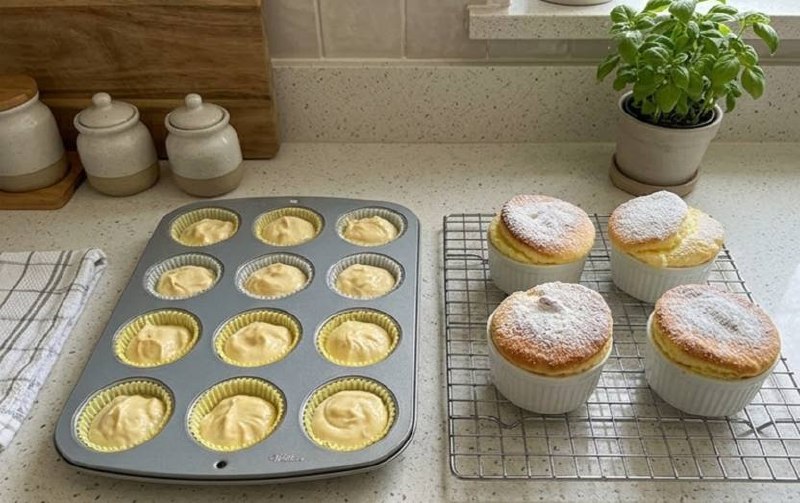
Instructions
- Preheat your oven to 375°F (190°C). Prepare four 4-ounce ramekins by generously buttering the inside of each one, making sure to coat all sides and the rim. Then, sprinkle about 1/4 tablespoon of granulated sugar into each ramekin, turning to coat the butter evenly, shaking out any excess. This creates a sugary crust that helps the soufflé rise and prevents sticking.
- In a small saucepan over medium heat, melt the 2 tablespoons of unsalted butter. Once melted, whisk in the 2 tablespoons of all-purpose flour and cook for 1-2 minutes, stirring constantly, until a smooth paste (roux) forms and smells slightly nutty.
- Gradually whisk in the warmed 1/2 cup of whole milk, a little at a time, ensuring no lumps form. Continue whisking until the mixture thickens into a smooth, creamy béchamel-like base. Remove from heat.
- Whisk the 2 egg yolks into the warm base one at a time until fully incorporated and the mixture is smooth and glossy. Stir in the 1/2 teaspoon of vanilla extract. Set aside to cool slightly.
- In a clean, dry large mixing bowl, using an electric mixer with a whisk attachment (or a hand whisk), beat the 3 room temperature egg whites with a pinch of salt on medium speed until soft peaks form.
- Gradually add the 1/4 cup of granulated sugar, one tablespoon at a time, while continuing to beat on medium-high speed. Continue beating until the egg whites are glossy and form stiff peaks (when you lift the whisk, the peaks should hold their shape firmly). Be careful not to overbeat, as this can make them dry and difficult to fold.
- Gently fold about one-third of the whipped egg whites into the cooled egg yolk base mixture using a spatula. This lightens the base and makes it easier to incorporate the remaining whites without deflating them.
- Add the remaining whipped egg whites to the lightened base. Using a gentle folding motion (cutting down through the middle and scooping up from the bottom), carefully incorporate the whites until just combined. Overmixing will deflate the egg whites and prevent the soufflé from rising. The mixture should still be light and airy.
- Carefully spoon the soufflé batter into the prepared ramekins, filling them about three-quarters full. You can gently run your thumb around the rim of each ramekin to create a small indentation, which encourages an even rise.
- Place the filled ramekins on a baking sheet and transfer to the preheated oven. Bake for 15-20 minutes, or until the soufflés are beautifully puffed, golden brown on top, and slightly jiggly in the center. Do not open the oven door during the first 10-12 minutes of baking, as this can cause them to collapse.
- Once baked, immediately remove the soufflés from the oven. Dust generously with powdered sugar just before serving. Serve them straight away, as soufflés begin to deflate within minutes of coming out of the oven.
Cooking Tips and Variations
Achieving a perfectly puffed soufflé is a delightful culinary feat, and a few key tips can ensure your success. First and foremost, ensure your egg whites are at room temperature. This allows them to whip up to their maximum volume, creating that essential airy structure. When whipping the egg whites, make sure your bowl and whisk are impeccably clean and free of any grease, as even a tiny speck of fat can prevent them from reaching stiff peaks. The folding step is perhaps the most crucial; always be gentle! You want to incorporate the egg whites without deflating them, preserving all that precious air. Use a spatula and a light, scoop-and-fold motion. Resist the urge to open the oven door during baking, especially in the first two-thirds of the cooking time, as the sudden change in temperature can cause your soufflés to collapse dramatically. For a slightly higher rise, you can create a “collar” for your ramekins by greasing and sugaring a strip of parchment paper and tying it around the rim, extending about 2 inches above. This gives the soufflé something to climb. Serving immediately is non-negotiable; soufflés wait for no one! As for variations, the possibilities are endless. For a decadent chocolate soufflé, melt 2 ounces of good quality dark chocolate into your warm base mixture. For a zesty lemon version, add 1 tablespoon of lemon zest and 1 tablespoon of fresh lemon juice to the base. Savory soufflés are equally delicious; for a classic cheese soufflé, omit the vanilla and sugar from the base, and instead, stir in 1/2 cup of grated Gruyere or Parmesan cheese. You can also add finely chopped herbs like chives or thyme for an aromatic twist. The base recipe is incredibly versatile, inviting you to experiment with flavors that tickle your fancy.
Storage and Reheating
Soufflés are notoriously delicate and are truly at their best when served immediately, straight from the oven. Their light, airy structure is ephemeral and will begin to deflate within minutes of being exposed to cooler air. Therefore, storing and reheating a baked soufflé is generally not recommended if you want to experience its signature puff and texture. Once cooled, the soufflé will inevitably lose its height and much of its airy quality, becoming denser and more cake-like. While still edible, it won’t have the same magical appeal. If you happen to have leftovers (which is rare with something this delicious!), you can store them in an airtight container in the refrigerator for up to 1-2 days. However, attempting to reheat them will not restore their original light texture. Reheating in a microwave will likely result in a rubbery consistency, and even in an oven, they will warm through but remain dense. The best approach for enjoying soufflés is to plan to serve them right away and savor every moment of their fleeting perfection. If you want to prepare ahead, you can make the base mixture (before folding in the egg whites) and store it covered in the refrigerator for up to 24 hours. When ready to bake, gently warm the base, whip the egg whites, fold them in, and proceed with baking.
Frequently Asked Questions
What makes a soufflé rise so dramatically?
The incredible rise of a soufflé is primarily due to the air incorporated into the whipped egg whites. As the soufflé bakes, the air trapped within the egg whites expands, and the moisture in the batter turns to steam, which also contributes to the lift. The egg whites provide the structural framework that holds this expanded air and steam, allowing the soufflé to puff up and create its signature light and airy texture.
Why did my soufflé collapse after taking it out of the oven?
Soufflés are very sensitive to temperature changes and sudden movements. They often begin to deflate shortly after being removed from the oven because the internal structure, which is reliant on the heat to keep the air expanded, starts to cool and contract. Common reasons for immediate collapse include not baking long enough (the structure isn’t fully set), opening the oven door during baking (causing a sudden temperature drop), or simply the natural process of cooling. Serving them immediately is the key to enjoying their full height.
Can I prepare soufflé batter ahead of time?
While you can prepare the base mixture (the egg yolk and flour/milk mixture) ahead of time and store it in the refrigerator for up to 24 hours, it’s crucial to whip and fold in the egg whites just before baking. The delicate air in the whipped egg whites is what gives the soufflé its rise, and this air will deflate if the batter sits for too long. For the best results, assemble the complete batter and bake immediately.
What’s the difference between a sweet and savory soufflé?
The fundamental technique for both sweet and savory soufflés is the same: a flavorful base lightened with stiffly beaten egg whites. The main difference lies in the ingredients added to the base. Sweet soufflés typically include sugar, vanilla, chocolate, fruit purees, or liqueurs. Savory soufflés often feature cheese (like Gruyère or Parmesan), herbs, vegetables, or meats, and typically omit sugar from the base, though a pinch of sugar can sometimes be added to the egg whites to stabilize them.