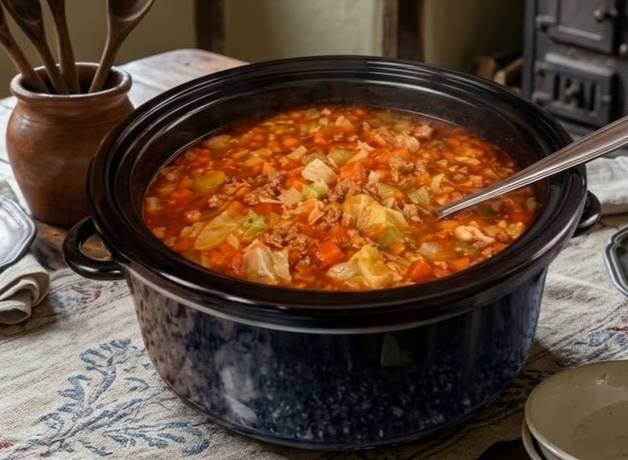
Instructions
- If using ground meat, heat the olive oil in a large skillet over medium-high heat. Add the ground beef and cook, breaking it apart with a spoon, until browned and no longer pink. Drain off any excess fat. Transfer the browned meat to the slow cooker insert.
- Add the chopped onion, minced garlic, diced carrots, and diced celery to the slow cooker with the browned meat (or directly to the slow cooker if omitting meat).
- Add the chopped cabbage, crushed or diced tomatoes (with their juices), beef broth, Worcestershire sauce, dried oregano, dried thyme, black pepper, and bay leaf to the slow cooker.
- Stir all the ingredients gently to combine.
- Cover the slow cooker and cook on low for 6-8 hours or on high for 3-4 hours, or until the vegetables are tender and the flavors have melded.
- About 30 minutes before serving, remove the bay leaf. Taste the soup and add salt as needed. Keep in mind that broth and canned tomatoes can vary in sodium content, so adjust accordingly.
- If desired, stir in 1 tablespoon of red wine vinegar or apple cider vinegar just before serving to brighten the flavors.
- Ladle the hot soup into bowls. Garnish with fresh parsley or dill, if using. Serve immediately.
Cooking Tips and Variations
For the best slow cooker cabbage soup, don’t skip browning the ground meat first. This crucial step adds a significant depth of flavor and a better texture to the meat, preventing it from just boiling in the broth. If you prefer your cabbage with a bit more bite, you can add it during the last 1-2 hours of cooking on low, rather than at the very beginning. This prevents it from becoming overly soft. Always taste your soup before serving and adjust the seasonings – salt, pepper, and even a pinch more herbs can make a big difference in the final flavor profile. Remember that flavors intensify as the soup sits, so you might need to adjust again upon reheating.
This recipe is incredibly versatile, allowing for numerous variations to suit your taste or dietary needs. For a vegetarian or vegan version, simply omit the ground beef and use vegetable broth. You can also add a can of drained and rinsed cannellini beans or chickpeas for extra protein and fiber. To make it heartier, consider adding diced potatoes (russet or Yukon gold work well) along with the other vegetables at the beginning of the cooking process. Other vegetables like bell peppers, zucchini, or green beans can also be added for more variety. If you’re not a fan of ground meat, cooked shredded chicken, sliced smoked sausage, or even leftover roast beef can be incorporated for a different protein twist. For a touch of heat, add a pinch of red pepper flakes. A splash of lemon juice at the end can also provide a bright finish if you don’t have vinegar on hand. Don’t be afraid to experiment with different dried herbs like marjoram or a dash of smoked paprika for an extra layer of complexity.
Storage and Reheating
This slow cooker cabbage soup is an excellent candidate for meal prep and freezes beautifully, making it perfect for batch cooking. Once the soup has cooled completely, transfer it to airtight containers. It will keep well in the refrigerator for up to 3-4 days. For longer storage, you can freeze the soup in freezer-safe containers or heavy-duty freezer bags for up to 3 months. If using freezer bags, lay them flat in the freezer to save space and ensure quicker thawing. Label with the date for easy tracking.
To reheat refrigerated soup, simply transfer the desired portion to a saucepan and warm over medium heat on the stovetop, stirring occasionally, until heated through. Alternatively, microwave individual servings in a microwave-safe bowl, stirring every minute or so, until hot. If reheating from frozen, it’s best to thaw the soup in the refrigerator overnight before reheating on the stovetop or in the microwave. If you’re in a hurry, you can gently reheat frozen soup directly in a saucepan over low heat, stirring frequently and breaking up the frozen block as it thaws, until it reaches a simmering temperature. You may need to add a splash of extra broth or water if the soup has thickened too much during storage.
Frequently Asked Questions
Can I use different types of cabbage?
Yes, while green cabbage is traditional and works wonderfully, you can certainly experiment with other varieties. Napa cabbage will cook down more quickly and has a milder flavor, while savoy cabbage offers a slightly more delicate texture. Red cabbage can also be used, but be aware that its color will bleed into the broth, giving the soup a purplish hue.
Do I have to brown the ground meat?
While you don’t *have* to, it’s highly recommended. Browning the ground meat before adding it to the slow cooker develops a richer, deeper flavor through the Maillard reaction. It also allows you to drain off excess fat, resulting in a less greasy soup. If you skip this step, the meat will cook directly in the broth, which can result in a different texture and less intense flavor.
My soup seems too thin/thick. How can I adjust it?
If your soup is too thin, you can try simmering it on high in the slow cooker with the lid slightly ajar for the last hour to allow some liquid to evaporate. Alternatively, you can mix 1 tablespoon of cornstarch with 2 tablespoons of cold water to create a slurry, then stir it into the hot soup and cook for another 15-30 minutes until thickened. If your soup is too thick, simply stir in additional beef broth or water, a quarter cup at a time, until it reaches your desired consistency.
Can I add potatoes or other root vegetables?
Absolutely! Potatoes, sweet potatoes, turnips, or parsnips are great additions. If adding potatoes, dice them into 1-inch pieces and add them at the beginning of the cooking process along with the other vegetables. They will soften beautifully and add extra heartiness and starch to the soup, making it even more filling.