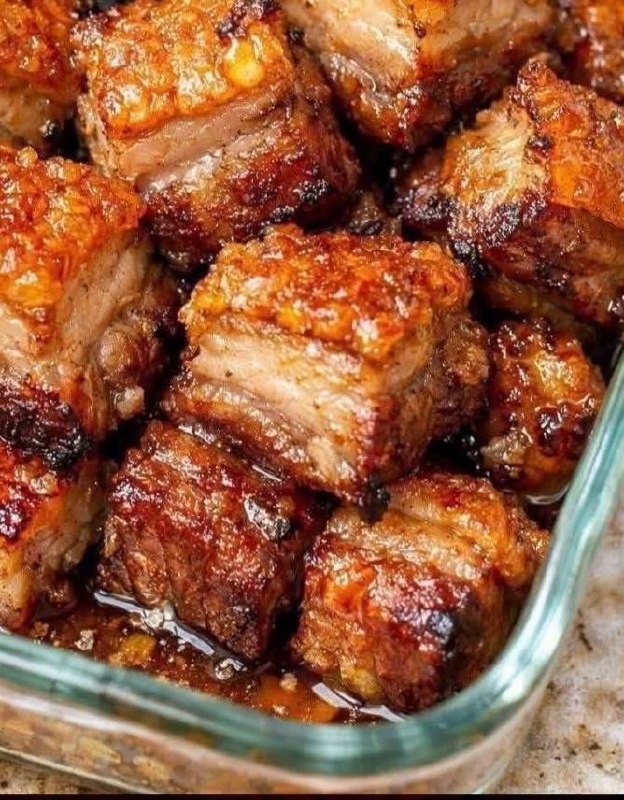
Instructions
- Prepare the Pork Belly: Remove the pork belly from its packaging and pat it thoroughly dry with paper towels. This step is crucial for crispy skin. Place it skin-side up on a cutting board.
- Score the Skin: Using a very sharp knife or a razor blade, carefully score the pork belly skin in a crosshatch pattern, about 1/4 to 1/2 inch deep, making sure not to cut through the fat layer into the meat. The scoring helps the fat render and allows the skin to crisp evenly. You can also score it in parallel lines if preferred.
- Season the Meat: Flip the pork belly over so the meat side is facing up. In a small bowl, combine 1 tablespoon coarse sea salt, black pepper, garlic powder, onion powder, and five-spice powder (if using). Rub this seasoning mixture generously all over the meat side and along the sides of the pork belly, ensuring it’s well coated.
- Prepare for Drying (Optional, but Recommended): Place the seasoned pork belly, skin-side up, on a wire rack set over a baking sheet. Loosely cover with paper towels (to absorb moisture) and refrigerate for at least 8 hours, or preferably overnight (up to 24 hours). This further dries out the skin, which is key to achieving maximum crispiness.
- Preheat Oven and Initial Roast: When ready to cook, remove the pork belly from the refrigerator and let it sit at room temperature for 30 minutes. Preheat your oven to 300°F (150°C).
- Prepare for Roasting: Place the pork belly, skin-side up, on a clean wire rack set inside a roasting pan or baking dish. Pour 1 cup of water into the bottom of the roasting pan, ensuring the water does not touch the pork belly skin. This creates a steamy environment that helps tenderize the meat.
- Salt and Vinegar the Skin: Before placing in the oven, generously sprinkle the skin with the remaining 1 tablespoon of coarse sea salt. Then, brush the entire surface of the skin with white vinegar. The salt helps draw out moisture, and the vinegar helps break down the skin, promoting crispiness.
- Slow Roast: Transfer the roasting pan to the preheated oven and roast for 1.5 to 2 hours. The goal here is to slowly render the fat and tenderize the meat. The skin will not be crispy yet.
- Increase Heat for Crisping: After the initial roasting period, carefully remove the roasting pan from the oven. Increase the oven temperature to 400-425°F (200-220°C). Carefully drain any accumulated water and rendered fat from the roasting pan (reserve the fat if desired for other cooking).
- Crisp the Skin: Return the pork belly to the oven, still on the wire rack over the baking sheet (no water this time). Roast for another 30-45 minutes, or until the skin is deeply golden brown, puffed up, and shatteringly crispy. Keep a close eye on it during this stage, as it can go from perfect to burnt quickly. If some areas are crisping faster than others, you can loosely tent them with foil.
- Optional Broiling for Extra Crisp: For ultimate crispiness, you can briefly switch to the broiler for the last 5-10 minutes. Place the pork belly about 6-8 inches from the broiler element and watch it constantly, turning the pan as needed, until the skin is perfectly blistered and crunchy. Be extremely careful not to burn it.
- Rest the Pork Belly: Once the skin is perfectly crispy, remove the pork belly from the oven and transfer it to a cutting board. Let it rest for at least 15-20 minutes. This allows the juices to redistribute, ensuring tender, moist meat.
- Prepare the Glaze (if using): While the pork belly rests, combine soy sauce, honey or brown sugar, sesame oil, grated ginger, and minced garlic in a small saucepan. Bring to a simmer over medium heat, stirring until the sugar dissolves and the glaze slightly thickens. Remove from heat.
- Cut into Bites: After resting, carefully cut the pork belly into uniform 1-inch to 1.5-inch cubes or “bites.” A serrated knife can be helpful for cutting through the crispy skin.
- Glaze and Serve: If using the glaze, you can either toss the warm pork belly bites directly in the glaze or brush it over them just before serving. Serve immediately and enjoy your incredibly Crispy Pork Belly Bites!
Cooking Tips and Variations
Achieving that perfect, shatteringly crispy skin is the holy grail of pork belly, and several factors contribute to its success. The most critical tip is to ensure the skin is as dry as possible. After patting it dry, refrigerating it uncovered on a wire rack overnight is a game-changer; the circulating air dehydrates the skin, making it far more receptive to crisping. Don’t skip the scoring step; it allows fat to render efficiently and prevents the skin from puffing up unevenly. When applying salt and vinegar to the skin, be generous but make sure to wipe off any excess moisture that might reappear before roasting. During the high-heat crisping phase, keep a vigilant eye on the pork belly. Ovens can have hot spots, so rotating the pan and even moving the pork belly around can ensure even browning. If you notice a particular spot crisping too quickly, you can loosely tent it with a small piece of aluminum foil.
For variations, the world of flavor is your oyster. For an Asian-inspired twist, beyond the optional five-spice powder, consider a marinade for the meat before cooking. A mixture of soy sauce, rice wine, ginger, garlic, and a touch of brown sugar can penetrate the meat with incredible flavor. You can also add a pinch of white pepper to the dry rub. For a spicier kick, infuse your glaze with sriracha or gochujang, or simply sprinkle chili flakes over the finished bites. A honey-garlic variation can be achieved by increasing the honey in the glaze and adding more minced garlic. If you’re a fan of smoky flavors, a touch of liquid smoke in the initial seasoning or a smoked paprika in the dry rub can add depth. For a different texture, after the initial slow roast and before the final crisping, you could cut the pork belly into bites and finish them in an air fryer at a high temperature (around 400°F/200°C) for 10-15 minutes, tossing occasionally, for incredibly efficient crisping. Just be sure to not overcrowd the air fryer basket. Another fun option is to serve these bites in mini bao buns with pickled vegetables and a drizzle of hoisin sauce for a gourmet appetizer.
Storage and Reheating
Crispy Pork Belly Bites are best enjoyed immediately after cooking, as the skin’s crispiness is at its peak. However, if you have leftovers, they can be stored in an airtight container in the refrigerator for up to 3-4 days. It’s important to note that the skin will lose some of its crispness once refrigerated, as moisture migrates. To get the best results when reheating, avoid the microwave, as it will make the skin chewy and rubbery. The best method for reheating is to place the pork belly bites on a wire rack set over a baking sheet in a preheated oven or air fryer. Preheat your oven to 350°F (175°C) and bake for 10-15 minutes, or until heated through and the skin begins to re-crisp. In an air fryer, set it to 375°F (190°C) and cook for 5-8 minutes, shaking the basket occasionally, until hot and crispy. Keep a close eye on them to prevent burning. While the skin may not return to its original shatteringly crisp state, these methods will yield the closest approximation and ensure the meat remains tender and flavorful.
Frequently Asked Questions
Why is my pork belly skin not crispy?
The most common reasons for non-crispy skin are insufficient drying, not scoring the skin deeply enough (or not at all), or not using high enough heat at the end of the cooking process. Ensure you pat the skin thoroughly dry, ideally refrigerating it uncovered overnight, and always finish with a high-heat roast or broil. The salt and vinegar application also plays a crucial role in drawing out moisture and aiding the crisping process.
Can I prepare pork belly in advance?
Yes, you can prepare the pork belly up to the point of the initial slow roast. After the 1.5-2 hour slow roast, let it cool completely, then wrap it tightly and refrigerate for up to 2-3 days. When you’re ready to serve, remove it from the fridge, let it come to room temperature for 30 minutes, then proceed with the high-heat crisping step. This makes it a fantastic make-ahead option for entertaining.
What can I do with the rendered fat?
The rendered pork fat (lard) is a culinary gem! Once it cools and solidifies, it can be strained and stored in an airtight container in the refrigerator for several weeks, or frozen for longer storage. It’s excellent for roasting vegetables, frying eggs, making crispy potatoes, or even for baking, adding a wonderful richness and flavor to many dishes.
Can I cook pork belly without an oven?
While an oven is ideal for the slow roast and high-heat crisping, you can achieve similar results with an air fryer or by deep frying. For air frying, you would follow the initial slow cook (perhaps at a lower temperature in the air fryer for longer, or a quick boil/steam to tenderize), then finish at a high temperature (around 400°F/200°C) until crispy. Deep frying cubed, par-cooked pork belly is also an option for incredible crispiness, but it’s much more involved and requires careful handling of hot oil.