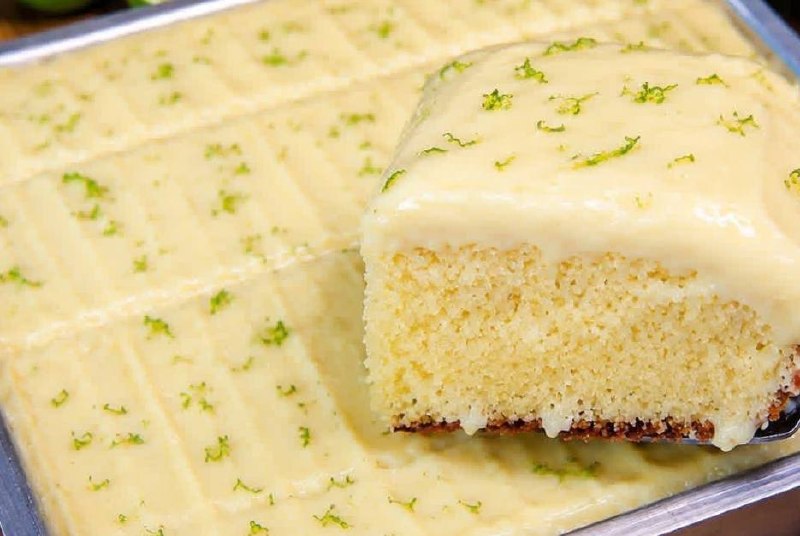
Instructions
- Preheat your oven to 350°F (175°C). Grease and flour a 9×13 inch baking pan, or line with parchment paper, leaving an overhang on the sides for easy removal.
- In a large bowl, whisk together the dry ingredients for the cake: all-purpose flour, granulated sugar, baking powder, baking soda, and salt. Make sure there are no lumps and the ingredients are well combined.
- In a separate medium bowl, combine the wet ingredients: softened unsalted butter, large eggs, buttermilk, fresh lime juice, lime zest, and vanilla extract. Whisk until thoroughly combined and smooth.
- Pour the wet ingredients mixture into the dry ingredients. Using a rubber spatula or a hand mixer on low speed, mix until just combined. Be careful not to overmix; a few small lumps are acceptable. Overmixing can lead to a tough cake.
- Pour the cake batter evenly into the prepared 9×13 inch baking pan. Spread it gently to reach all corners.
- Bake for 30-35 minutes, or until a wooden skewer or toothpick inserted into the center of the cake comes out with moist crumbs attached, but no wet batter. The cake should be lightly golden brown on top and spring back when gently pressed.
- Once baked, remove the cake from the oven and place it on a wire rack to cool in the pan for about 15-20 minutes. This allows the cake to set and prevents it from sticking.
- While the cake is cooling, prepare the lime glaze. In a medium bowl, whisk together the sifted powdered sugar, fresh lime juice, and lime zest until smooth. If the glaze is too thick, add milk or cream one teaspoon at a time until it reaches a pourable, yet thick, consistency. If it’s too thin, add a little more sifted powdered sugar.
- After 15-20 minutes of cooling in the pan, carefully invert the cake onto the wire rack to cool completely. If you used parchment paper, you can lift it out using the overhangs. Ensure the cake is entirely cool before applying the glaze; otherwise, the glaze will melt and run off.
- Once the cake is completely cool, place the wire rack with the cake over a baking sheet (to catch any drips). Pour the prepared lime glaze evenly over the top of the cake, spreading it gently with the back of a spoon or an offset spatula to cover the entire surface.
- Immediately sprinkle extra lime zest over the wet glaze for an added burst of color and aroma.
- Allow the glaze to set for about 15-30 minutes, or until it’s no longer sticky to the touch.
- Once the glaze is set, cut the cake into squares or desired serving sizes using a sharp knife.
- Serve and enjoy your refreshing Lime Cake!
Cooking Tips and Variations
For the absolute best lime flavor, always use fresh lime juice and zest. Bottled lime juice simply doesn’t compare to the bright, aromatic punch that fresh limes provide. When zesting, be sure to only get the green outer layer and avoid the bitter white pith underneath. A microplane zester works wonders for this. To achieve a perfectly moist cake, avoid overmixing the batter. Mix until just combined; a few small lumps are perfectly fine. Overmixing develops the gluten in the flour too much, leading to a dry, tough cake. Another crucial tip for moisture is to not overbake. Keep a close eye on the cake towards the end of the baking time, and remove it from the oven as soon as a toothpick comes out with moist crumbs. For the glaze, ensure your powdered sugar is sifted to prevent lumps, which can make your glaze gritty. Adjust the consistency of the glaze slowly; add lime juice or milk/cream a teaspoon at a time until it’s pourable but still thick enough to coat the cake without being too thin. Always allow the cake to cool completely before glazing. If the cake is even slightly warm, the glaze will melt and absorb into the cake, rather than forming a beautiful, smooth layer.
This versatile lime cake recipe lends itself beautifully to several delightful variations. For a tropical twist, try adding ½ cup of shredded unsweetened coconut to the cake batter to create a luscious lime-coconut cake. You can even sprinkle some toasted coconut flakes on top of the glaze for extra texture and flavor. If you’re a fan of other citrus fruits, this recipe can easily be adapted to a lemon cake or even an orange cake by simply swapping out the lime juice and zest for their lemon or orange counterparts. The proportions remain the same, but the flavor profile will shift beautifully. For a burst of color and additional freshness, top the glazed cake with a handful of fresh berries like raspberries, blueberries, or sliced strawberries just before serving. Their tartness complements the lime wonderfully. If you desire a richer, creamier frosting instead of a simple glaze, consider making a lime cream cheese frosting. Combine 8 ounces softened cream cheese, ½ cup softened unsalted butter, 4 cups powdered sugar, 2-3 tablespoons lime juice, and 1 tablespoon lime zest. Beat until light and fluffy, then spread over the cooled cake. This variation adds a luxurious depth to the dessert. Experiment with adding a touch of mint extract to the cake batter or glaze for an even more refreshing, mojito-inspired flavor. You can also press some finely chopped pistachios into the sides of the glazed cake for a nutty crunch and elegant presentation. The possibilities are endless, allowing you to customize this delicious cake to your exact preferences.
Storage and Reheating
To keep your Lime Cake fresh and delicious, proper storage is key. Once the glaze has set, you can store the cake at room temperature for up to 2-3 days, provided it’s in an airtight container. This prevents it from drying out and keeps the glaze from becoming sticky. If your kitchen is particularly warm or humid, or if you prefer a firmer cake and glaze, storing it in the refrigerator is a good option. In the refrigerator, the cake will stay fresh for up to 5-7 days. Just make sure it’s tightly covered to prevent it from absorbing any odors from other foods. Before serving a refrigerated cake, it’s often best to let it sit at room temperature for about 15-30 minutes to allow the cake and glaze to soften slightly, enhancing its texture and flavor. This cake is typically enjoyed chilled or at room temperature, making it a convenient dessert for entertaining. It does not require reheating.
If you’ve baked a large cake and want to save some for later, this lime cake freezes beautifully. For best results, cut the cake into individual servings before freezing. Place the slices on a baking sheet lined with parchment paper and freeze until solid, about 2-3 hours. Once frozen, wrap each slice tightly in plastic wrap, then again in aluminum foil, and place them in a freezer-safe bag or container. This double-wrapping helps prevent freezer burn. The cake can be stored in the freezer for up to 2-3 months. To enjoy a frozen slice, simply unwrap it and let it thaw at room temperature for a few hours, or overnight in the refrigerator. The texture and flavor will remain remarkably good, making it perfect for an impromptu treat. Do not attempt to reheat this cake in the microwave or oven, as it will likely melt the glaze and alter the delicate texture of the cake. The beauty of this dessert lies in its refreshing qualities when served cool or at room temperature.
Frequently Asked Questions
Can I use bottled lime juice instead of fresh?
While you certainly can use bottled lime juice in a pinch, we highly recommend using fresh lime juice and zest for the absolute best flavor. Fresh limes provide a brighter, more vibrant, and authentic citrus punch that bottled juice simply can’t replicate. The zest, in particular, carries much of the lime’s essential oils and aromatic qualities, which are crucial for this cake’s signature taste.
My cake turned out dry. What went wrong?
A dry cake is often a result of overbaking or overmixing the batter. When baking, keep a close eye on the cake and remove it from the oven as soon as a toothpick inserted into the center comes out with moist crumbs (not wet batter). Also, when mixing the wet and dry ingredients, mix only until they are just combined. Overmixing develops the gluten in the flour too much, leading to a tough and dry texture.
How can I make my glaze thicker or thinner?
Adjusting the glaze consistency is easy! If your glaze is too thick, add a very small amount (half a teaspoon at a time) of additional lime juice or milk/cream until it reaches your desired pourable consistency. If the glaze is too thin and runny, gradually whisk in more sifted powdered sugar, a tablespoon at a time, until it thickens up. Remember to add slowly and mix thoroughly after each addition to avoid over-correcting.
Can this cake be made ahead of time for an event?
Absolutely! This lime cake is an excellent make-ahead dessert. You can bake the cake and prepare the glaze a day or two in advance. Store the cooled, unglazed cake wrapped tightly at room temperature or in the refrigerator. Prepare the glaze just before serving or up to a day in advance, storing it in an airtight container in the fridge (you may need to whisk it again to loosen it up before pouring). Glaze the cake a few hours before your event to allow the glaze to set beautifully, or glaze it the day before and store it covered. The flavors often meld and deepen overnight, making it even more delicious.