Introduction
Imagine the rich aroma of the sea mingling with fragrant herbs and sweet tomatoes, bubbling gently to create a stew so comforting it feels like a warm hug. That, my friends, is the magic of Cioppino. Originating from the bustling wharves of San Francisco, this iconic Italian-American seafood stew is a celebration of fresh catches, simmered in a robust tomato and wine broth. Traditionally, cioppino can be a labor of love, requiring multiple pots and a watchful eye. But what if we told you that you could achieve all that deep, complex flavor with a fraction of the effort? Enter our Crockpot Seafood Cioppino Stew – a game-changer for busy weeknights and elegant entertaining alike.
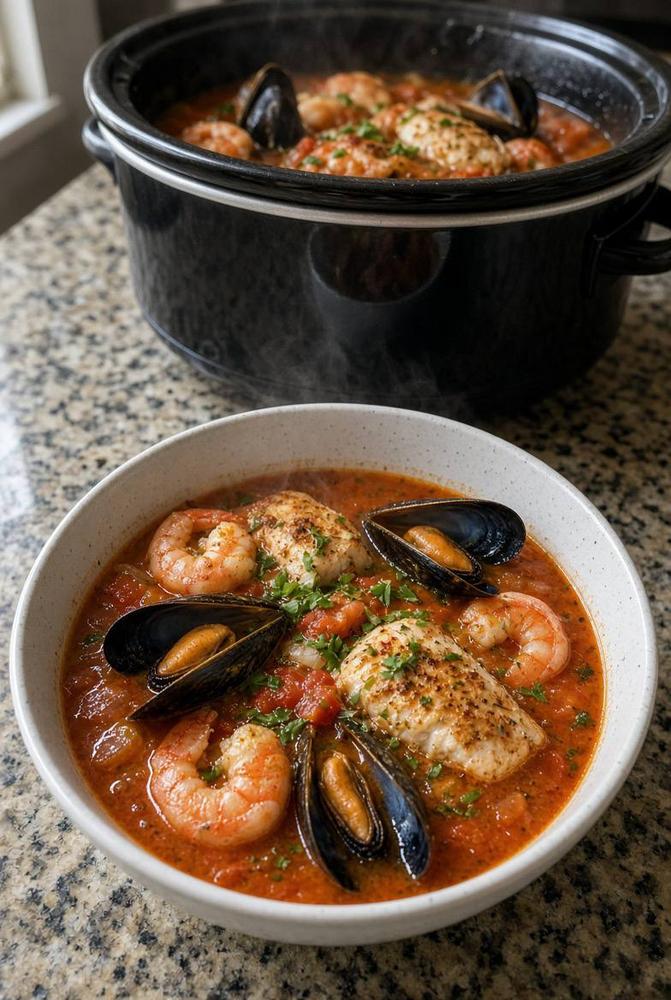
This recipe takes the heart and soul of classic cioppino and adapts it perfectly for the slow cooker, transforming a potentially time-consuming dish into a “set it and forget it” masterpiece. The low, slow heat of your crockpot works wonders, allowing the vibrant flavors of the tomatoes, aromatics, and seafood to meld together beautifully, creating a broth that is incredibly rich and satisfying. You’ll find plump shrimp, tender mussels, and flaky white fish swimming in a gorgeous reddish-orange base, all ready to be soaked up with crusty bread. It’s hearty, healthy, and undeniably delicious, delivering a taste of the Mediterranean right to your dinner table.
Prepare to impress your family and friends with this incredibly flavorful and surprisingly easy seafood stew. Whether you’re craving a taste of the ocean, looking for a comforting meal on a chilly evening, or planning a special gathering, this Crockpot Seafood Cioppino Stew is your answer. It’s a versatile dish that keeps warm perfectly, making it ideal for entertaining, and the minimal hands-on time means you can enjoy more moments with your loved ones. Get ready to dive into a bowl of pure, slow-cooked bliss!
Nutritional Information
Per serving (approximate values):
- Calories: 380
- Protein: 45g
- Carbohydrates: 25g
- Fat: 10g
- Fiber: 5g
- Sodium: 950mg
Ingredients
- 2 tablespoons olive oil
- 1 large yellow onion, chopped
- 4 cloves garlic, minced
- 1 medium fennel bulb, trimmed and thinly sliced (optional, but highly recommended)
- 1 (28 ounce) can crushed San Marzano tomatoes
- 1 (14.5 ounce) can diced tomatoes, undrained
- 1 cup dry white wine (such as Sauvignon Blanc or Pinot Grigio)
- 1 cup fish broth or vegetable broth
- 1 teaspoon dried oregano
- 1/2 teaspoon dried thyme
- 1/4 teaspoon red pepper flakes (or more, to taste)
- 1 bay leaf
- 1 pound firm white fish fillets, such as cod, halibut, or snapper, cut into 1-inch pieces
- 1 pound large shrimp, peeled and deveined (tail-on or tail-off)
- 1 pound fresh mussels, scrubbed and de-bearded
- 1/2 cup fresh parsley, chopped, for garnish
- Salt and freshly ground black pepper to taste
- Crusty bread for serving
Instructions
- In a large skillet, heat the olive oil over medium heat. Add the chopped onion and fennel (if using) and cook until softened, about 5-7 minutes.
- Add the minced garlic and red pepper flakes to the skillet and cook for another 1 minute until fragrant, being careful not to burn the garlic.
- Carefully transfer the sautéed onion, fennel, and garlic mixture to the slow cooker insert.
- Pour in the crushed San Marzano tomatoes, diced tomatoes (with their liquid), white wine, and fish or vegetable broth into the slow cooker.
- Stir in the dried oregano, dried thyme, and bay leaf. Season with a generous pinch of salt and freshly ground black pepper.
- Cover the slow cooker and cook on LOW for 4-6 hours or on HIGH for 2-3 hours. The goal is to allow the flavors to meld and the sauce to thicken slightly.
- About 30-45 minutes before serving, add the firm white fish pieces to the slow cooker. Gently stir to submerge them in the broth.
- About 15-20 minutes before serving, add the peeled shrimp and scrubbed mussels to the slow cooker.
- Increase the heat to HIGH if cooking on LOW, or maintain on HIGH, and cover. Cook until the shrimp are pink and opaque, the fish is cooked through and flaky, and all the mussels have opened. Discard any mussels that do not open.
- Carefully remove the bay leaf. Taste the stew and adjust seasoning with salt and pepper as needed.
- Ladle the Crockpot Seafood Cioppino Stew into warm bowls, ensuring each serving has a good mix of fish, shrimp, and mussels.
- Garnish generously with fresh chopped parsley.
- Serve immediately with plenty of crusty bread for dipping into the delicious broth.
Cooking Tips and Variations
For the deepest flavor, do not skip the initial sauté of the aromatics (onion, garlic, fennel). This step builds a robust base for your stew that slow cooking alone cannot fully achieve. If you’re short on time, you can add them directly to the crockpot, but the sauté makes a noticeable difference. When it comes to seafood, quality matters. Opt for fresh, high-quality fish and shellfish from a reputable source. If using frozen, ensure it’s fully thawed and patted dry before adding to the stew. Avoid overcooking the seafood; shrimp and fish become rubbery and dry if cooked too long. Adding them in the last 15-45 minutes of cooking ensures they are perfectly tender and succulent. For an even richer broth, you can add a tablespoon of tomato paste to the aromatics when sautéing. To balance the acidity, a tiny splash of good quality balsamic vinegar or a squeeze of fresh lemon juice just before serving can brighten the flavors beautifully.
This recipe is incredibly versatile. Feel free to experiment with different types of seafood. Scallops, clams, or even calamari rings would be excellent additions. If using clams, add them at the same time as the mussels. For an extra layer of flavor, consider adding a pinch of saffron threads, steeped in a little warm broth, towards the end of cooking. You can also boost the vegetable content by adding chopped bell peppers (red or yellow work well) or a handful of fresh spinach during the last 10 minutes of cooking. If you prefer a spicier stew, increase the red pepper flakes or add a dash of your favorite hot sauce. For a creamier texture, a splash of heavy cream or coconut milk can be stirred in at the very end, just before serving, but this deviates from traditional cioppino. Always taste and adjust seasonings at the end, as the flavors will deepen and change during the slow cooking process.
Storage and Reheating
Crockpot Seafood Cioppino Stew is best enjoyed fresh, especially with the delicate seafood components. However, if you have leftovers, they can be stored in an airtight container in the refrigerator for up to 2 days. Be aware that the texture of the fish and shrimp may change slightly upon reheating, becoming a bit firmer. The mussels should ideally be consumed on the day of cooking; if reheating, ensure they are thoroughly heated through. To reheat, gently warm the stew on the stovetop over medium-low heat until heated through, stirring occasionally. Avoid boiling to prevent the seafood from becoming tough. You can also reheat individual portions in the microwave, but be mindful not to overcook. Freezing seafood stew is generally not recommended as the seafood can become very rubbery and the broth’s texture might suffer. If you must freeze, consider freezing just the tomato broth base without the seafood, then adding freshly cooked seafood when you’re ready to serve.
Frequently Asked Questions
Can I prepare the ingredients ahead of time?
Absolutely! You can chop the onion, garlic, and fennel a day in advance and store them in an airtight container in the refrigerator. You can also measure out your canned tomatoes, broth, wine, and dry seasonings. This makes the assembly process even quicker on cooking day.
What if I don’t have white wine?
If you prefer not to use alcohol, you can substitute the white wine with an equal amount of additional fish or vegetable broth. While the wine adds a layer of depth and acidity that is characteristic of cioppino, the stew will still be delicious without it.
Can I use frozen seafood directly in the slow cooker?
It is best to thaw frozen seafood completely before adding it to the slow cooker. Adding frozen seafood can lower the temperature of the stew too much and lead to uneven cooking. Thaw shrimp and fish overnight in the refrigerator or under cold running water.
How do I know if the mussels are fresh and safe to eat?
When purchasing mussels, ensure they are tightly closed. Before cooking, scrub them thoroughly under cold water and de-beard them (pull off any stringy bits). Discard any mussels that are open and do not close when tapped. After cooking, discard any mussels that did not open, as this indicates they were not alive or safe to eat.