Introduction
Imagine a culinary escape to Thailand, right from the comfort of your own kitchen, with minimal effort and maximum flavor. That’s precisely what our Crockpot Creamy Thai Red Curry Chicken delivers! This dish is a symphony of vibrant aromas and comforting textures, a truly magical blend of spicy, savory, and subtly sweet notes that dance on your palate. The rich, aromatic red curry paste, combined with the luscious creaminess of coconut milk, transforms simple chicken and vegetables into an extraordinary meal that feels both exotic and deeply satisfying. It’s the kind of dish that warms you from the inside out, making even the busiest weeknight feel like a special occasion.
What truly makes this Thai Red Curry Chicken a game-changer is the magic of your slow cooker. Forget slaving over a hot stove; this recipe is designed for ultimate convenience, allowing you to “dump and go” and let your crockpot do all the heavy lifting. As the chicken slowly simmers in the fragrant sauce, it becomes incredibly tender, practically melting in your mouth, while the flavors meld and deepen to perfection. The result is a vibrant, creamy curry, packed with tender chicken and crisp-tender vegetables, all bathed in that irresistible orange-red sauce. It’s a family-friendly meal that’s robust enough for a crowd yet simple enough for a quiet evening at home, proving that incredible flavor doesn’t have to come with complicated steps.
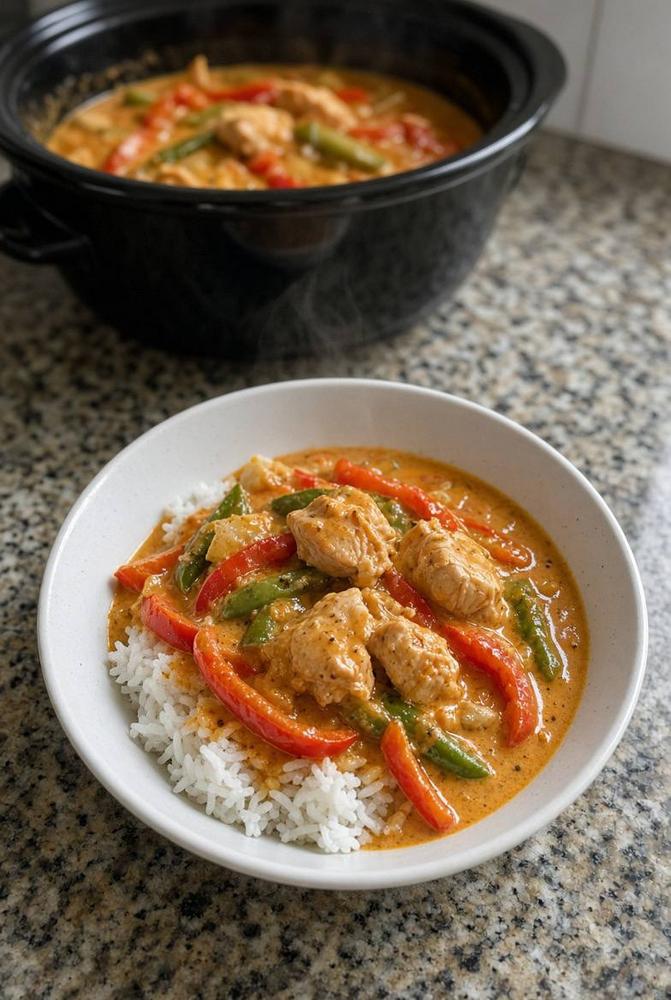
This recipe isn’t just about ease; it’s about creating a truly exceptional eating experience. The visual appeal alone is enough to entice – a rich, fiery red sauce studded with colorful bell peppers and green beans, all ready to be spooned over fluffy white rice. The steam rising from the bowl promises warmth and comfort, while the initial scent of coconut and exotic spices instantly transports you. Whether you’re a seasoned curry connoisseur or new to the world of Thai flavors, this Crockpot Creamy Thai Red Curry Chicken is guaranteed to become a cherished addition to your recipe rotation, offering a taste of authentic Thai cuisine with the effortless charm of slow cooking.
Nutritional Information
Per serving (approximate values):
- Calories: 480
- Protein: 35g
- Carbohydrates: 30g
- Fat: 25g
- Fiber: 5g
- Sodium: 750mg
Ingredients
- 2 lbs boneless, skinless chicken breasts or thighs, cut into 1-inch cubes
- 1 (13.5 ounce) can full-fat coconut milk
- 1 (13.5 ounce) can light coconut milk (or another full-fat for extra creaminess)
- 4-6 tablespoons red curry paste (adjust to preferred spice level)
- 1 large red bell pepper, thinly sliced
- 1 cup fresh green beans, trimmed and halved
- 1 medium yellow onion, chopped
- 3 cloves garlic, minced
- 1 tablespoon fresh ginger, grated
- 1 tablespoon brown sugar (or honey/maple syrup)
- 1 tablespoon fish sauce (optional, but highly recommended for authentic flavor)
- 1 lime, juiced (for serving)
- Fresh cilantro, chopped (for garnish)
- Cooked white rice, for serving
Instructions
- Prepare the chicken by cutting it into uniform 1-inch cubes. If using chicken thighs, trim any excess fat.
- In a large slow cooker, combine the cubed chicken, chopped yellow onion, minced garlic, and grated ginger.
- Pour in both cans of coconut milk (full-fat and light). Stir gently to combine.
- Add the red curry paste to the slow cooker. Start with 4 tablespoons for a mild-medium spice level, and add more if you prefer a spicier curry. Stir well until the curry paste is fully dissolved and evenly distributed throughout the coconut milk.
- Stir in the brown sugar and fish sauce (if using). These ingredients balance the flavors and add depth to the curry.
- Cover the slow cooker and cook on LOW for 6-8 hours or on HIGH for 3-4 hours. The chicken should be fork-tender.
- Approximately 30-45 minutes before serving, add the thinly sliced red bell pepper and halved green beans to the slow cooker. Stir them into the curry gently.
- Continue cooking until the vegetables are crisp-tender. You don’t want them to become mushy.
- Taste the curry and adjust seasonings if necessary. You might want to add a pinch more brown sugar for sweetness, a dash more fish sauce for umami, or a squeeze of lime juice for brightness.
- Just before serving, stir in the fresh lime juice.
- Serve the Crockpot Creamy Thai Red Curry Chicken hot over a bed of fluffy white rice.
- Garnish generously with fresh chopped cilantro. For an extra touch, you can also add a few lime wedges on the side, chopped peanuts, or a sprinkle of red pepper flakes for more heat.
Cooking Tips and Variations
To achieve the absolute best results with your Crockpot Creamy Thai Red Curry Chicken, consider a few key tips. Firstly, always opt for full-fat coconut milk for optimal creaminess and richness. While light coconut milk can be used, full-fat provides that luxurious texture that makes this dish so satisfying. Secondly, don’t shy away from the fish sauce; it’s a secret weapon in Thai cuisine, adding a crucial layer of umami and depth without making the dish taste “fishy.” Start with a tablespoon and adjust to your preference. When it comes to the red curry paste, remember that brands vary significantly in spice level. It’s always better to start with the lower recommended amount and add more later if you crave extra heat. Taste testing near the end of cooking is your best friend for perfecting the balance of sweet, spicy, and savory.
For even more flavor, consider briefly searing the chicken cubes in a hot pan with a little oil before adding them to the slow cooker. This step, while optional and adding a bit more prep, creates a delicious browned crust that locks in juices and adds a deeper, more complex flavor to the final dish. If you’re looking to thicken the sauce slightly, you can remove the lid for the last 30 minutes of cooking or, for a quicker fix, whisk a tablespoon of cornstarch with a tablespoon of cold water and stir it into the hot curry during the last 15 minutes of cooking. This creates a beautifully velvety sauce.
This recipe is incredibly versatile and open to numerous variations. To make it spicier, you can increase the amount of red curry paste, add a pinch of cayenne pepper, or serve with a side of sliced fresh chilies. For a milder version, reduce the curry paste or choose a brand known for less heat. You can easily swap out the chicken for other proteins; cubed pork loin or even firm tofu (pressed and cubed) would work wonderfully. If using shrimp, add it only during the last 20-30 minutes of cooking to prevent it from becoming tough. For a vegetarian or vegan option, substitute chicken with extra firm tofu, chickpeas, or a medley of hearty vegetables like butternut squash or sweet potatoes, and ensure your red curry paste is vegan-friendly (some contain shrimp paste).
Feel free to customize the vegetables based on what you have on hand or what’s in season. Other great additions include sliced bamboo shoots, water chestnuts for crunch, baby corn, snow peas, or even spinach (stirred in during the last 10 minutes until wilted). For an extra pop of freshness and aroma, consider adding a few kaffir lime leaves to the slow cooker at the beginning of cooking, removing them before serving. A tablespoon of peanut butter stirred in at the end can also add a delightful nutty richness and further thicken the sauce, creating a “Panang-style” curry. Don’t forget the garnishes! Fresh basil leaves, chopped peanuts, or a drizzle of sriracha can elevate the presentation and flavor even further.
Storage and Reheating
This Crockpot Creamy Thai Red Curry Chicken is an excellent dish for meal prepping and makes for delicious leftovers. To store, allow the curry to cool completely to room temperature before transferring it to airtight containers. It can be stored in the refrigerator for up to 3-4 days. Ensure the container is sealed well to maintain freshness and prevent odors from spreading in your fridge. For longer storage, this curry freezes beautifully. Divide the cooled curry into freezer-safe containers or heavy-duty freezer bags, leaving a little headspace if using containers. It can be frozen for up to 2-3 months. Thaw frozen curry overnight in the refrigerator before reheating.
When reheating, there are a few methods to ensure your curry remains delicious and creamy. For individual portions, the microwave is your quickest option. Transfer a serving to a microwave-safe bowl, cover loosely, and heat on high in 1-2 minute intervals, stirring in between, until heated through. For larger quantities or a more gentle reheat, transfer the curry to a saucepan or pot on the stovetop over medium-low heat. Stir frequently to prevent sticking and ensure even heating. If the curry seems too thick after refrigeration or freezing, you can add a splash of chicken broth, water, or extra coconut milk to achieve your desired consistency. Avoid boiling the curry rapidly, as this can sometimes cause the coconut milk to separate. A gentle simmer is best for reheating.
Frequently Asked Questions
Can I make this recipe spicier or milder?
Absolutely! The spice level is easily adjustable. To make it spicier, simply add more red curry paste at the beginning of cooking, or stir in a pinch of red pepper flakes or a few slices of fresh bird’s eye chilies just before serving. For a milder curry, start with less red curry paste (e.g., 2-3 tablespoons) and taste before adding more. You can also use a brand of curry paste known for being less spicy.
What kind of chicken is best for this curry?
Boneless, skinless chicken breasts or thighs both work wonderfully in this recipe. Chicken breasts will yield a leaner curry, while chicken thighs tend to stay juicier and more tender during the long slow cooking process, adding a bit more richness to the dish. Cut them into uniform 1-inch cubes for even cooking.
Can I add other vegetables to this curry?
Yes, this recipe is very flexible with vegetables! Feel free to add other quick-cooking vegetables like spinach (stir in during the last 10 minutes until wilted), snow peas, baby corn, or even sliced mushrooms. Harder vegetables like cubed sweet potatoes or butternut squash can be added at the beginning with the chicken, as they require longer cooking times.
Why is my curry sauce thin, and how can I thicken it?
If your curry sauce seems thinner than desired, there are a few reasons and solutions. Ensure you’re using full-fat coconut milk, as it contributes significantly to the creaminess. You can also remove the lid from the slow cooker for the last 30-60 minutes of cooking to allow some of the liquid to evaporate and the sauce to reduce. For a quicker fix, mix 1 tablespoon of cornstarch with 1 tablespoon of cold water to create a slurry, then stir it into the hot curry during the last 15-20 minutes of cooking until it thickens.