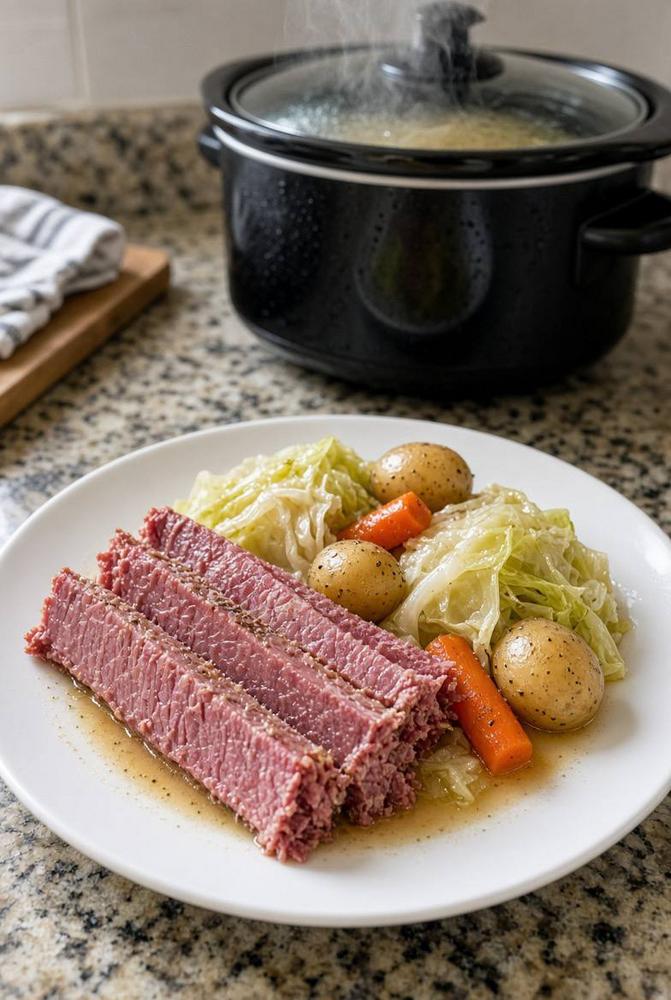
Crockpot Corned Beef, Cabbage & Potatoes
Introduction
There’s something uniquely comforting about a hearty, one-pot meal that practically cooks itself. As the days get shorter and the evenings grow cooler, or perhaps as St. Patrick’s Day approaches, our thoughts often turn to classic, soul-satisfying dishes. And when it comes to ultimate comfort, few meals deliver quite like tender corned beef, sweet cabbage, and wholesome potatoes, all cooked together until every component is infused with deep, savory flavor. This isn’t just a meal; it’s an experience – a warm hug on a plate, promising both deliciousness and ease.
The beauty of this particular recipe lies in its simplicity, thanks to the magic of your trusty crockpot. Gone are the days of constant stovetop monitoring or oven-bound worries. With a slow cooker, you can transform a humble brisket into incredibly tender, fall-apart corned beef, while simultaneously cooking your vegetables to perfection. The result is a vibrant, flavorful dish where the meat is juicy, the cabbage is wonderfully soft and sweet, the carrots are tender but retain their shape, and the small, waxy potatoes are cooked through without turning to mush. It’s a hands-off approach that yields maximum flavor with minimal effort, making it ideal for busy weeknights, holiday gatherings, or simply when you crave a truly satisfying meal.
This article will guide you through creating the most delicious Crockpot Corned Beef, Cabbage & Potatoes you’ve ever tasted. We’ll cover everything from selecting the right ingredients to layering them for optimal results, ensuring that every bite is as flavorful and tender as the image suggests. Get ready to discover your new favorite way to enjoy this beloved classic, transforming a simple piece of brisket into a succulent centerpiece surrounded by perfectly cooked, seasoned vegetables that practically melt in your mouth.
Nutritional Information
Per serving (approximate values):
- Calories: 650-750
- Protein: 45-55g
- Carbohydrates: 50-60g
- Fat: 25-35g
- Fiber: 8-10g
- Sodium: 1800-2200mg
Ingredients
- 3-4 lb corned beef brisket (flat cut or point cut), with spice packet included
- 1 medium head of green cabbage, cut into 6-8 wedges
- 1.5 lbs small red potatoes or baby potatoes, scrubbed clean (halved if larger than 2 inches)
- 1 lb carrots, peeled and cut into 1-inch chunks
- 4 cups water or low-sodium beef broth (or a combination of water and beer like Guinness)
- 1 tablespoon whole pickling spice (if your corned beef didn’t come with a packet, or to enhance flavor)
- 1 bay leaf (optional)
- 1/2 teaspoon black pepper, plus more for serving
- 1/4 teaspoon salt (optional, as corned beef is salty)
- Fresh parsley, chopped, for garnish (optional)
Instructions
- Prepare the Corned Beef: Remove the corned beef from its packaging. Rinse it thoroughly under cold water to remove excess salt. Pat it dry with paper towels.
- Season the Meat: Rub the corned beef with the spice packet provided (or your own pickling spice). Place the seasoned corned beef brisket fat-side up into the bottom of a large 6-quart or larger slow cooker.
- Add Liquid and Spices: Pour 4 cups of water, beef broth, or beer (or a mix) around the corned beef in the slow cooker. Ensure the liquid mostly covers the meat. Add the bay leaf and any additional pickling spice if desired.
- Slow Cook the Meat: Cover the slow cooker and cook on the LOW setting for 7-8 hours, or on the HIGH setting for 4-5 hours, until the corned beef is very tender when pierced with a fork.
- Prepare Vegetables: About 2-3 hours before the corned beef is finished cooking (if cooking on LOW) or 1.5-2 hours (if cooking on HIGH), prepare your vegetables. Cut the cabbage into thick wedges, halve larger potatoes, and cut carrots into generous chunks.
- Add Vegetables to Crockpot: Carefully remove the corned beef from the slow cooker and set it aside on a cutting board, tented loosely with foil, to rest. This allows the meat to redistribute its juices. Skim any excess fat from the cooking liquid in the crockpot if desired.
- Cook Vegetables: Add the carrots and potatoes to the liquid in the slow cooker first, as they take longer to cook. Arrange them around the sides and bottom. Then, place the cabbage wedges on top of the carrots and potatoes. Sprinkle with black pepper and a pinch of salt if using.
- Continue Cooking: Return the lid to the slow cooker. Continue cooking on HIGH for 1.5-2 hours, or until the vegetables are tender but still hold their shape. The cabbage should be soft and slightly translucent, and the potatoes and carrots easily pierced with a fork.
- Slice and Serve: While the vegetables finish cooking, slice the rested corned beef against the grain into 1/4 to 1/2-inch thick slices. Slicing against the grain is crucial for tender results.
- Combine and Plate: Once the vegetables are tender, carefully remove them from the slow cooker. Arrange the sliced corned beef, cabbage, potatoes, and carrots on serving plates or a large platter. Drizzle with some of the flavorful cooking liquid from the crockpot. Garnish with fresh parsley if desired and serve immediately.
Cooking Tips and Variations
For the most tender and flavorful Crockpot Corned Beef, Cabbage & Potatoes, there are a few key tips and exciting variations to consider. First and foremost, don’t overcrowd your slow cooker. While it’s a one-pot meal, ensuring there’s enough space for the liquid to circulate and the ingredients to cook evenly is crucial. If you have a particularly large brisket and many vegetables, you might need to use a larger slow cooker or cook the vegetables in batches if you prefer them firmer.
Layering matters when adding your ingredients. Always place the corned beef at the bottom of the slow cooker, submerged in the liquid. This ensures it gets the most contact with the simmering liquid, leading to maximum tenderness and flavor infusion. When adding vegetables, prioritize those that take longer to cook, like carrots and potatoes, placing them beneath the cabbage. Cabbage cooks relatively quickly and can become overly soft if added too early, so placing it on top allows it to steam gently and retain a pleasant texture. If you prefer your cabbage with a bit more bite, you can even add it during the last 30-45 minutes of cooking.
Resting the meat after cooking is a non-negotiable step for juicy, tender corned beef. Just like any other cut of meat, allowing the corned beef to rest for 10-15 minutes after removing it from the slow cooker redistributes the juices throughout the meat fibers, preventing them from escaping when you slice it. This ensures every slice is succulent and flavorful. And speaking of slicing, always remember to slice against the grain. Corned beef brisket has very visible muscle fibers; slicing perpendicular to these fibers shortens them, making the meat incredibly tender and easy to chew. Slicing with the grain will result in tough, chewy meat, regardless of how long it cooked.
When it comes to the cooking liquid, while water is perfectly fine, using low-sodium beef broth adds an extra layer of savory depth. For an authentic Irish twist, consider replacing some of the water with a dark stout beer, like Guinness. The beer adds a rich, malty flavor that complements the corned beef beautifully. You can also enhance the spice profile by adding extra whole pickling spices, a bay leaf, a few sprigs of fresh thyme, or even a quartered onion to the cooking liquid from the start. These aromatics will infuse the entire dish with a wonderful fragrance and taste.
For vegetable variations, feel free to experiment. While cabbage, potatoes, and carrots are traditional, you could add parsnips for a touch of sweetness and earthiness, or even some pearl onions for a milder onion flavor. If you’re a fan of garlic, a few whole cloves added to the pot will soften and lend a subtle garlicky note. For potatoes, small, waxy varieties like red potatoes, new potatoes, or Yukon Golds are best as they hold their shape well during slow cooking. Russet potatoes tend to break down too much. You can also choose to peel your potatoes or leave the skin on for added texture and nutrients, as seen in the image.
Finally, don’t be afraid to adjust seasoning to your taste. Corned beef is inherently salty, so taste the cooking liquid before adding extra salt to the vegetables. A sprinkle of fresh black pepper over the finished dish, as depicted, brightens all the flavors.
Storage and Reheating
Proper storage and reheating are essential to enjoy your Crockpot Corned Beef, Cabbage & Potatoes for days to come. This dish makes excellent leftovers, and with a few simple steps, you can ensure they taste just as good as the first serving.
Storage:
Once the meal has cooled completely to room temperature (within two hours of cooking), transfer the leftover corned beef, cabbage, potatoes, and carrots into separate airtight containers or combine them in one large container. If you have a good amount of the cooking liquid remaining, it’s beneficial to store the meat and vegetables with some of this liquid. The liquid helps keep the meat moist and prevents the vegetables from drying out. Store the containers in the refrigerator for up to 3-4 days. For longer storage, you can freeze individual portions in freezer-safe containers or heavy-duty freezer bags for up to 2-3 months. Label with the date for easy tracking.
Reheating:
Microwave: For individual servings, the microwave is the quickest option. Place the desired amount of corned beef and vegetables on a microwave-safe plate. Add a tablespoon or two of the cooking liquid (if available) to help moisten the dish. Cover with a microwave-safe lid or damp paper towel and heat on high for 2-3 minutes, stirring halfway through, until thoroughly heated. Be careful not to overheat, as this can dry out the meat and make the vegetables mushy.
Stovetop: To reheat a larger batch or to achieve a more even warmth, the stovetop works well. Transfer the leftovers (meat, vegetables, and some liquid) to a large pot or Dutch oven. Cover and heat over medium-low heat, stirring occasionally, until everything is heated through. This method is particularly good for maintaining moisture and preventing the meat from drying out. If the mixture seems too dry, add a splash of water or broth.
Oven: If reheating a substantial amount or if you prefer a gentle, even reheating method, the oven is an excellent choice. Preheat your oven to 300°F (150°C). Place the corned beef and vegetables in an oven-safe dish. Add a few tablespoons of the cooking liquid or broth to the bottom of the dish, and cover tightly with foil. Heat for 20-30 minutes, or until warmed through. This method is ideal for keeping the meat tender and preventing the vegetables from becoming overcooked.
From Frozen: If reheating from frozen, it’s best to thaw the dish overnight in the refrigerator first. Once thawed, proceed with one of the reheating methods above. If reheating directly from frozen, expect the cooking time to be significantly longer, especially in the oven or on the stovetop. Ensure the internal temperature reaches 165°F (74°C) for food safety.
Frequently Asked Questions
What is the difference between corned beef point cut and flat cut? Which should I use?
The corned beef point cut is typically fattier, more marbled, and tends to be more tender and flavorful when slow-cooked. It’s excellent for shredding for dishes like corned beef hash. The flat cut, or “brisket flat,” is leaner and has a more uniform shape, making it easier to slice neatly against the grain. Both cuts work wonderfully in the slow cooker. If you prefer a juicier, richer flavor and don’t mind a bit more fat, go for the point cut. If you prioritize neat slices for presentation, the flat cut is your best bet. The image depicts a well-sliced piece, suggesting a flat cut or a point cut expertly trimmed and sliced.
Can I add the vegetables at the beginning with the corned beef?
While technically you can add some vegetables at the beginning, it’s generally not recommended for optimal texture. Cabbage, in particular, can become extremely soft and mushy if cooked for the full duration of the corned beef. Potatoes and carrots can also get too soft. Adding them later, typically during the last 1.5-2 hours of cooking, ensures they are tender but still retain their shape and a pleasant texture, as seen in the image where the carrots and potatoes are firm yet cooked through. This staggered addition allows each component to cook to its ideal tenderness.
My corned beef is tough; what went wrong?
If your corned beef turns out tough, it’s usually due to one of two reasons: either it wasn’t cooked long enough, or it wasn’t sliced correctly. Corned beef brisket is a tough cut of meat that requires a long, slow cooking process to break down its connective tissues and become tender. Ensure you cook it until it’s easily pierced with a fork. The other common culprit is slicing with the grain instead of against it. Always identify the muscle fibers and slice perpendicular to them to shorten the fibers, making the meat incredibly tender and easy to chew. Resting the meat before slicing is also crucial for tenderness.
Can I use fresh pickling spice instead of the packet?
Absolutely! If your corned beef doesn’t come with a spice packet, or if you want to enhance the flavor, you can make your own pickling spice blend. A good homemade blend typically includes whole black peppercorns, mustard seeds, coriander seeds, allspice berries, cloves, red pepper flakes, and a bay leaf. Add 1-2 tablespoons of this blend directly to the cooking liquid with the corned beef. You can place the spices in a cheesecloth bag for easier removal, though it’s not strictly necessary. This allows you to customize the spice profile to your liking and ensures a wonderfully aromatic and flavorful dish.